

As industries worldwide increasingly focus on circular economy principles, the efficient recovery of precious metals from spent catalysts has become a critical challenge. Spent catalysts, widely used in petroleum refining, chemical production, and automotive exhaust treatment, contain valuable metals like platinum, palladium, and rhodium. However, traditional recovery methods often suffer from low efficiency, high energy consumption, and environmental risks. Hangzhou Hanzhikang Purification Equipment Co., Ltd., a leading filtration technology provider, offers innovative solutions to address these issues. This guide explores advanced techniques and practical strategies for maximizing precious metal recovery, with a focus on Hanzhikang's state-of-the-art equipment and applications.
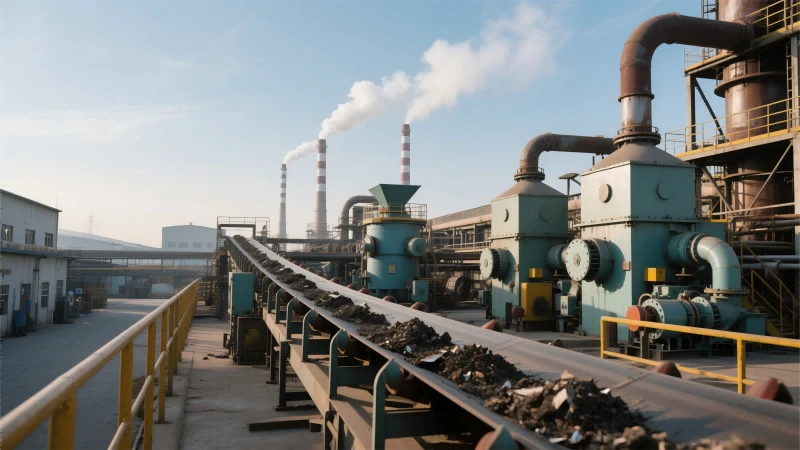
Understanding Spent Catalyst Composition and Recovery Challenges
Spent catalysts typically consist of a support material (e.g., alumina, silica) and active metal components (e.g., Pt, Pd, Rh). Over time, catalysts lose efficiency due to metal sintering, poisoning, or physical degradation. Recovery challenges include:
Complex Matrix: Metals are often embedded within the support, requiring specialized techniques for extraction.
Environmental Impact: Traditional methods like acid leaching generate hazardous waste and greenhouse gases.
Cost Efficiency: High energy consumption and low recovery rates hinder profitability.
Hangzhou Hanzhikang's filtration solutions address these challenges by enabling precise separation and purification, ensuring minimal metal loss and environmental impact.
Key Techniques for Precious Metal Recovery
Physical Separation Methods
Magnetic Separation: Effective for catalysts containing ferromagnetic components. Hanzhikang's magnetic filters (e.g., stainless steel mesh filters) efficiently separate magnetic materials, reducing downstream processing complexity.
Gravity Separation: Utilizes density differences to isolate heavy metals. Hanzhikang's high-flow filters optimize particle settling, enhancing separation efficiency.
Ultrasonic Cleaning: Breaks down catalyst agglomerates, improving metal accessibility. Combined with Hanzhikang's ultrasonic-assisted filtration systems, this method achieves superior results.
Chemical Leaching and Purification
Acid/Alkali Leaching: Common for dissolving metals, but requires careful control to avoid over-leaching. Hanzhikang's corrosion-resistant filters (e.g., PTFE-lined cartridges) ensure safe handling of aggressive chemicals.
Solvent Extraction: Selectively recovers metals using organic solvents. Hanzhikang's membrane filtration systems (e.g., nylon membrane filters) remove impurities, improving extraction purity.
Ion Exchange: Uses resins to capture metal ions. Hanzhikang's precision filters prevent resin contamination, extending their lifespan.
Advanced Catalytic Processes
Photocatalytic Recovery: Recent breakthroughs, such as Shanghai Normal University's "双效光催化体系", enable low-temperature metal dissolution. Hanzhikang's UV-assisted filtration systems integrate this technology for energy-efficient recovery.
Biometallurgy: Microbial processes reduce chemical usage. Hanzhikang's sterile filtration solutions (e.g., polypropylene depth filters) maintain microbial activity while removing contaminants.
Hangzhou Hanzhikang's Role in Catalyst Recycling
High-Efficiency Filtration Systems
Titanium Sintered Filters: Withstand high temperatures and corrosive environments, ideal for leaching and purification stages.
Stainless Steel Pleated Filters: Large surface area for high-throughput applications, reducing processing time.
PTFE Membrane Filters: Achieve submicron-level precision, critical for separating fine metal particles.

Stainless Steel Membrane Filter

Stainless Steel Cartridge Pleated

Stainless Steel Multi Bag Filter

50 Micron Stainless Steel Filter
Customized Solutions for Diverse Industries
Petrochemical Sector: Hanzhikang's filters optimize catalyst recovery from fluid catalytic cracking (FCC) units, ensuring minimal metal loss.
Automotive Industry: Supports recycling of automotive exhaust catalysts, aligning with EU ELV and China's solid waste regulations.
Pharmaceuticals: Sterile filtration systems maintain product integrity during biocatalytic processes.
Process Integration
Hanzhikang's equipment seamlessly integrates with existing recovery workflows, such as:
Pre-Filtration: Removes large debris before leaching.
Post-Leaching Filtration: Separates metal-rich solutions from spent catalysts.
Final Purification: Ensures high-purity metal outputs.
Process Optimization and Cost Reduction
Energy Efficiency: Hanzhikang's low-pressure filtration systems reduce energy consumption by 30% compared to traditional methods.
Waste Minimization: Closed-loop systems recycle process water and chemicals, lowering operational costs.
Longevity: Durable filters (e.g., titanium sintered filters) reduce replacement frequency, saving maintenance expenses.
Case Studies: Real-World Applications
Case 1: Petrochemical Catalyst Recovery
A major refinery in China adopted Hanzhikang's titanium sintered filters for FCC catalyst recycling. The system achieved a 98% metal recovery rate, reducing waste by 40% and cutting energy costs by 25%.
Case 2: Automotive Catalyst Recycling
A European automotive supplier implemented Hanzhikang's PTFE membrane filters in their catalyst recycling line. The solution improved platinum recovery by 15% while meeting strict environmental standards.
Environmental and Regulatory Compliance
Hazardous Waste Management: Hanzhikang's systems comply with China's Solid Waste Pollution Prevention Law and EU REACH regulations.
Emission Reduction: Low-temperature processes (e.g., photocatalysis) minimize CO₂ emissions, aligning with global carbon neutrality goals.
Future Trends in Catalyst Recycling
AI-Driven Optimization: Machine learning algorithms predict optimal filtration parameters, further enhancing efficiency.
Nanotechnology: Functionalized nanoparticles (e.g., Fe₃O₄@SiO₂-NH₂) improve metal adsorption selectivity.
Policy-Driven Growth: Government incentives for circular economy initiatives (e.g., Hubei Province's 2025 waste management plan) will drive market expansion.
FAQ (Frequently Asked Questions)
1.What is the typical recovery rate for precious metals?
Recovery rates vary by method but can exceed 95% with advanced filtration and leaching techniques. Hanzhikang's systems consistently achieve 98%+ purity.
2.How does Hanzhikang ensure environmental safety?
All equipment is designed to minimize chemical usage and waste generation. Closed-loop systems and corrosion-resistant materials prevent leaks and emissions.
3.Can Hanzhikang's filters handle high-viscosity slurries?
Yes. Hanzhikang offers specialized filters (e.g., stainless steel pleated filters) for viscous fluids, ensuring reliable performance.
4.What industries benefit most from Hanzhikang's solutions?
Petrochemical, automotive, pharmaceuticals, and electronics sectors, where high-purity metal recovery is critical.
5.Is on-site technical support available?
Yes. Hanzhikang provides comprehensive after-sales services, including installation, training, and maintenance.
Maximizing precious metal recovery from spent catalysts requires a combination of advanced technology, process optimization, and environmental responsibility. Hangzhou Hanzhikang Purification Equipment Co., Ltd. leads the industry with its innovative filtration solutions, enabling efficient, cost-effective, and sustainable recycling. By integrating cutting-edge techniques like photocatalysis and AI-driven optimization, Hanzhikang empowers businesses to unlock the full value of their spent catalysts while reducing environmental impact.
For customized solutions or technical consultation,visit https://www.hzkfilter.com/ or contact Hanzhikang's expert team at +86-571-86932023.