

Table of contents
2. Analysis of the applicability of core water sources
●Tap water: Basic protection requirements under low impurities
●Well water/groundwater: High-precision filtration and complex pollution challenges
●River water: Large particle interception and ecological pollution response
3. Technical differences and typical cases
4. Industry trends: Intelligent and modular development
1. Industry background: Differences in water sources give rise to diversified filtration technologies
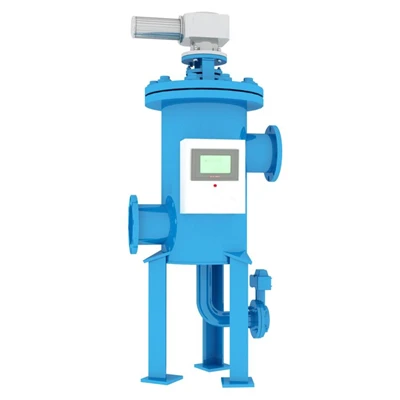
As the industrialization process accelerates, water pollution issues are becoming increasingly complex, and filtration equipment needs to be designed specifically according to the water source type, impurity composition, and usage scenarios. The mainstream filter types on the market currently include pre-filters, multi-media filters, activated carbon filters, reverse osmosis equipment, etc., and their applicability varies significantly depending on the characteristics of the water source.
Working Principle
The self-cleaning sedimentation water filter adopts advanced filtering technology, and its core components usually include high-precision filter screens. When water flows through the filter, impurities such as silt, suspended matter, and colloids in the water are intercepted by the filter screen. As impurities continue to accumulate, the filter will automatically start the cleaning program according to preset parameters, such as pressure difference or time interval. During the cleaning process, impurities on the filter screen are removed by rotating brushes or suction ports, and discharged from the filter through the drain valve, ensuring that the filter screen always maintains good filtering performance and achieves a continuous and stable filtering effect.
2. Analysis of the applicability of core water sources
●Tap water: basic protection needs under low impurities
1. Applicable technology: pre-filter (precision 40-100μm), activated carbon filter element.
2. Effect: mainly intercept large particles such as rust and sand produced by pipeline aging, improve taste and extend the life of back-end water purification equipment.
3. Case: Panasonic faucet water purifier removes residual chlorine and tiny suspended matter through seven-stage filtration (including stainless steel mesh, diatom mud ceramics, etc.), and is suitable for municipal tap water.
●Well water/groundwater: high-precision filtration and complex pollution challenges
1. Applicable technology: reverse osmosis (RO membrane), manganese sand filter, activated carbon composite filter element.
2. Effect: need to deal with suspended matter, bacteria, heavy metals (such as iron, manganese) and pesticide residues. For example, manganese sand filter can remove iron ions in a targeted manner; reverse osmosis technology can treat high-hardness water.
3. Challenge: The quality of well water fluctuates greatly, and it needs to be tested regularly and matched with a multi-stage filtration system.
●River water: interception of large particles and response to ecological pollution
1. Applicable technologies: multi-media filter (quartz sand + anthracite), bag filter, stainless steel precision security filter.
2. Effect: Focus on filtering sediment, algae, colloids and microorganisms. For example, in river water treatment, the quartz sand-activated carbon combination can effectively reduce turbidity, and the stainless steel filter element can cope with high impurity loads.
3. Maintenance difficulties: The filter element is easy to clog and requires high-frequency backwashing or replacement
3. Technical differences and typical cases
| Water source type | Typical equipment | Filtration accuracy | Core functions |
| Tap water | Pre-filter, ultrafiltration water purifier | 0.01-100μm | Basic protection, taste optimization |
| Well water | Reverse osmosis water purifier | 0.0001μm (RO) | Heavy metal removal, microbial inactivation |
| River water | Multi-media mechanical filter | 5-50μm | Suspended matter interception, pretreatment, stable water quality |
Case: A rural area used a homemade well water filter (activated carbon + quartz sand + stainless steel mesh three-level structure) to successfully reduce the turbidity from 15NTU to below 1NTU, with a cost of only 30% of commercial equipment.
4. Industry trends: Intelligent and modular development
Intelligent monitoring:
Sensors monitor water quality and filter life in real time, such as TDS value and flow change warning.
Modular design:
Supports on-demand combination of filter elements, such as anti-scaling modules can be stacked in hard water areas, and high-flow filter tanks can be adapted for industrial scenarios.
Environmental protection needs:
Washable filter elements (such as diatom mud ceramics) reduce waste, and backwashing technology reduces energy consumption.
Conclusion
The characteristics of the water source determine the direction of the selection of filtration technology. In the future, the industry will pay more attention to customized solutions and sustainable development capabilities. Users need to select equipment based on water quality test reports and pay attention to filter element maintenance costs and long-term performance.
The performance of self-cleaning sedimentation water filters in different water sources has its own advantages and disadvantages. When treating well water, it can effectively remove silt and rust, but other treatment technologies must be combined for microorganisms and soluble pollutants; when treating river water, it has a significant filtering effect on silt and suspended matter, but its ability to deal with algae and chemical pollutants is limited; when treating tap water, it mainly plays a role in assisting in improving water quality and protecting equipment. In actual applications, users should reasonably select and configure self-cleaning sedimentation water filters according to the specific conditions of their own water sources, and combine them with other necessary water treatment equipment to ensure safe and high-quality water use. At the same time, related industries should also continuously develop and improve filter technology to improve its adaptability and purification capacity to different water sources to meet the growing demand for water.