

As people's requirements for drinking water safety and quality of life continue to increase, water filters are increasingly used in homes, offices and even industrial fields. As an important device for purifying drinking water, the core component of the water filter, the filter element, plays a key role. The filter element not only determines the effect of water purification, but also directly affects the service life and maintenance cost of the equipment. In recent years, with the development of new materials, new technologies and multi-stage filtration concepts, the types and performance of various filter elements have been continuously updated, providing users with more efficient and intelligent water purification solutions. This article will comprehensively analyze the basic principles, classifications, application scenarios and technology development trends of filter elements in water filters, aiming to provide an authoritative and detailed industry reference report for engineering and technical personnel, product buyers and users.
Contents
1. Basic principles and composition of filter elements
1.1 Working principle of filter elements
1.2 Main materials and structures of filter elements
1.3 Functions and effects of filter elements
2. Classification and application fields of filter elements
2.1 Household drinking water filter elements
2.2 Commercial and office filter elements
2.3 Industrial and special application filter elements
2.4 Analysis of multi-stage filtration technology
3. Selection and replacement cycle of filter elements
3.1 Factors affecting the service life of filter elements
3.2 How to determine whether the filter element needs to be replaced?
3.3 Selection criteria under different environments
4. Installation, maintenance and inspection of filter elements
4.1 Installation process of filter elements in water filter
4.2 Common faults and troubleshooting methods
4.3 Regular inspection and maintenance recommendations
5. Summary and recommendations
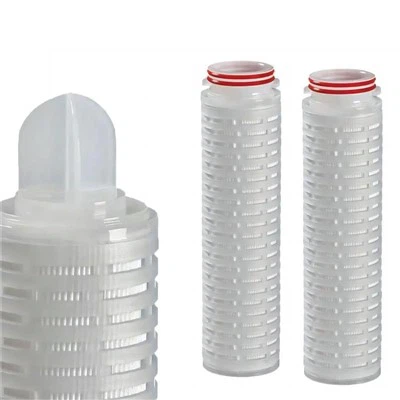
1. Basic principles and composition of filter elements
1.1 Working principle of filter elements
The filter element is the most critical component in the water filter. Its basic working principle is to intercept or decompose suspended particles, dissolved organic matter, heavy metal ions and other pollutants in water through physical, chemical and biological effects, so as to achieve the purpose of purifying water quality. Common working principles mainly include the following aspects:
Mechanical interception: using the physical barrier effect of the filter element pore size to intercept large particles of impurities on the surface or inside the filter material;
Adsorption: through activated carbon or other adsorption materials, odors, harmful chemicals and some heavy metal ions in the water are adsorbed on the surface;
Chemical reaction: some filter elements convert soluble pollutants into harmless substances or precipitate them through chemical reactions;
Biological treatment: some high-end filter elements even integrate biofilm technology to use microorganisms to decompose organic pollutants in water.
This series of principles cooperate with each other, so that the filter element can not only efficiently remove pollutants in the water, but also improve the taste and safety of water.
1.2 Main materials and structures of filter elements
The constituent materials of the filter element are diverse, mainly depending on its expected use scenario and the required purification effect. Common materials include:
Activated carbon: known for its excellent adsorption capacity, it can effectively remove residual chlorine, odor, pesticide residues and organic pollutants in water;
Ceramics: It has high mechanical strength and microporous structure, can filter bacteria and tiny particles, and is often used in high-precision filtration systems;
Polypropylene (PP) and polyester fiber: as basic filter materials, used for primary mechanical filtration, intercepting larger particles and impurities;
Composite materials: Compounding multiple materials in a specific proportion, retaining their respective advantages, and realizing multi-stage filtration functions, suitable for strict water purification equipment.
In addition, the structural design of the filter element is also very critical. The mainstream filter element design on the current market usually adopts a multi-layer structure, with the outer layer as the primary filtration and the inner layer for deep purification of finer pollutants. The multi-stage filtration design not only improves the overall purification efficiency, but also extends the service life of the filter element.
1.3 Functions and effects of filter elements
The main functions of filter elements in water filters are reflected in the following aspects:
Purify water quality: remove suspended particles, soluble pollutants and harmful microorganisms in water through multiple filtration to ensure drinking water safety;
Protect equipment: prevent impurities from entering the equipment, reduce equipment wear, and extend the service life of water filters and related equipment;
Improve taste: remove odor and residual chlorine, make water fresher and taste better;
Energy saving and consumption reduction: efficient filtration system can ensure that the equipment operates in the best condition, reduce energy consumption and maintenance costs.
Through the above functions, the filter element plays an irreplaceable and important role in the entire water treatment system, which is directly related to the quality of the final water.
2. Classification and application fields of filter elements
2.1 Household drinking water filter element
The filter element in the household drinking water system mainly focuses on water purification and taste improvement. Common types include:
Activated carbon filter element: mainly used to remove residual chlorine, odor and some organic pollutants in water. The pore structure of activated carbon gives it a high adsorption capacity and is widely used in household water purifiers;
Composite filter element: Combining mechanical filtration and adsorption functions, the multi-layer structure can effectively remove various pollutants and ensure drinking water safety;
Ceramic filter element: Commonly used for deep purification, it can intercept bacteria, viruses and tiny particles to ensure that the water quality meets drinking standards.
These filter elements can meet the multi-level needs of household users for high-quality drinking water based on different filtration principles and material combinations.
2.2 Commercial and office filter elements
In commercial office environments, water filters are not only used in drinking water systems, but also in air conditioning and industrial water treatment. Such filter elements require:
High flow: Ability to process large amounts of water or air in a short period of time;
Long life: Maintain stable performance under continuous operation;
Low maintenance cost: Reduce replacement frequency to ensure continuous and efficient operation of the system.
Composite filter elements and high-efficiency mechanical filter materials are more common in such applications, which can not only meet the needs of high-efficiency filtration, but also reduce the risk of equipment downtime and maintenance.
2.3 Industrial and special application filter elements
Industrial water treatment, chemical production, food processing and other fields have higher requirements for water quality and filtration. The application characteristics of filter elements include:
High temperature resistance and corrosion resistance: the material must be able to withstand extreme environments, such as high temperature, acid and alkali media, etc.;
Large flow and high precision: ensure that the water quality meets the standard requirements during high-speed production;
Multi-stage filtration: remove tiny particles and soluble pollutants through a multi-stage purification system.
These filter elements usually use composite materials and high-precision filtration technology to meet the dual requirements of industrial production for purification effect and system stability.
2.4 Analysis of multi-stage filtration technology
Multi-stage filtration technology is an important development direction in current filter element design. By combining pretreatment filter elements, adsorption filter elements and precision filtration filter elements, the multi-stage filtration system can remove pollutants of different particle sizes and properties in layers and stages. The advantages of this technology are:
Improve filtration efficiency: targeted filtration at each level of filter element to ensure that the final water quality meets the standard;
Extend the service life of the filter element: the primary filter element first intercepts large particle impurities to reduce the burden of subsequent filter elements;
Reduce maintenance costs: the multi-stage filtration system runs more smoothly and the maintenance cycle is extended.
Multi-stage filtration technology is not only suitable for household drinking water, but also widely used in commercial, industrial and special water treatment systems, providing users with efficient and reliable purification solutions.
3. Selection and replacement cycle of filter elements
3.1 Factors affecting the service life of filter elements
The service life of filter elements is affected by many factors, mainly including:
Influent water quality: the higher the concentration of suspended particles, dissolved substances and pollutants in the water, the faster the filter element will be blocked;
Flow rate and frequency of use: high flow rate and continuous use will accelerate the wear and saturation of the filter element;
Filter element material and structural design: high-quality materials and reasonable structural design can significantly extend the life of the filter element;
Ambient temperature and operating conditions: extreme temperature and pressure conditions will also affect the performance of the filter element.
Understanding these factors will help users make scientific decisions based on actual needs when selecting models.
3.2 How to determine whether the filter element needs to be replaced?
Common methods for determining when to replace the filter element include:
Decrease in filtration effect: When the water quality index of the outlet water is detected to decrease (such as increased residual chlorine content and increased turbidity), it indicates that the adsorption capacity of the filter element is reduced;
Increase in pressure difference: In continuous operation, if the pressure difference before and after the system increases significantly, it usually means that the filter element is blocked;
Use time reaches the specified cycle: According to the product manual, the filter element generally has a recommended replacement cycle;
Appearance changes: When the color of the filter element surface becomes darker, there is an odor, or obvious sediment appears, it is also a signal that it needs to be replaced.
Regular inspection and maintenance are important measures to ensure water quality safety and efficient operation of equipment.
3.3 Selection criteria in different environments
The selection criteria of the filter element should be combined with the actual use environment:
Domestic drinking water: requires efficient adsorption of odors and harmful substances, while retaining some beneficial minerals. It is recommended to use a composite filter element;
Commercial office: has high requirements for filtration speed and flow rate. It is recommended to choose products with good durability and high filtration accuracy;
Industrial production: due to the complex environment, the filter element needs to be resistant to high temperature, corrosion and high load capacity. It is recommended to use a multi-stage composite filter element.
Choosing a suitable filter element can not only improve the filtration effect, but also extend the service life of the equipment and reduce long-term operating costs.

4. Installation, maintenance and inspection of filter elements
4.1 Installation process of filter elements in water filter
Installation of filter elements is a key step to ensure the normal operation of the entire filtration system, which usually includes:
Shut down the system: the water supply system should be shut down before replacement to prevent water flow accidents during the replacement process;
Remove the old filter element: open the filter element compartment cover according to the equipment manual and carefully remove the old filter element;
Cleaning the installation slot: use professional cleaning tools to clean the sediment in the filter element installation slot to ensure that there is no residue;
Install the new filter element: correctly install the new filter element according to the product model, and check whether the installation direction and seal are correctly placed;
Reset and test: after the installation is completed, reset the equipment and gradually open the water supply system to test the sealing and filtering effect of the new filter element.
4.2 Common faults and solutions
Problems that may be encountered during the filter element replacement process and their solutions include:
Unsecured installation or poor sealing: Check the sealing ring, rubber pad and fixings to ensure that the filter element fits tightly with the installation slot;
Filter element model does not match: Be sure to check the equipment model and filter element specifications before replacement to avoid a decrease in filtering effect due to model mismatch;
Water quality still does not meet the standard after replacement: It may be due to the fact that the residual contamination inside the system has not been completely removed. Repeat cleaning and monitoring data.
Regularly recording and analyzing equipment operation data will help to identify problems in time and take corresponding measures.
4.3 Regular inspection and maintenance recommendations
In order to ensure long-term stable operation, users should:
Establish a maintenance plan: formulate a regular replacement and inspection plan based on the equipment operation status and filter element use cycle;
Install a monitoring system: Use online monitoring equipment to monitor indicators such as water quality and pressure difference in real time, and promptly warn of filter element blockage or aging problems;
Record replacement history: Record each filter element replacement and maintenance in detail to provide a basis for subsequent improvements.
5.Summary and Suggestions
This article comprehensively analyzes the basic principles and composition, classification and application, selection and replacement cycle, installation and maintenance of filter elements, and the technological development trend, and elaborates on the important role of filter elements in water filters and their advantages in different application scenarios. The main conclusions are as follows:
The core role is irreplaceable: the filter element is the core component of the water filter, which directly determines the water purification effect and the stability of equipment operation;
Scientific selection and regular replacement: Reasonable selection according to the use environment and system requirements, and timely replacement of filter elements according to monitoring data and use cycle are the key to ensuring water quality safety and efficient operation of equipment;
Standardization of installation and maintenance: Correct installation process and regular maintenance can not only ensure long-term and efficient filtration of the filter element, but also reduce system operation costs and maintenance risks;
Technological innovation promotes intelligent development: The application of new materials, Internet of Things and intelligent early warning technology will bring higher filtration efficiency, longer service life and more convenient management methods to the filter element, and the future filter element market prospects are broad;
The importance of meeting international standards: Strict compliance with domestic and international standards such as ISO and NSF is of great significance to ensuring product quality and improving market competitiveness.
Based on the above conclusions, it is recommended that equipment users and maintenance engineers refer to product manuals and relevant standards when purchasing, installing and replacing filter elements, and formulate scientific maintenance plans based on the actual use environment. At the same time, pay attention to the developments of new materials and intelligent technologies, update equipment configurations in a timely manner, realize intelligent monitoring and automatic early warning, and ensure that the system is always in the best operating state.