

Table of contents
1. Industry status and problem background
2. Classification of abnormal noise causes and technical analysis
3. Typical cases and empirical data analysis
4. Solutions and technological innovation trends
5. Future development trends and industry recommendations
1. Industry status and problem background
In recent years, with the intelligent upgrading of industrial equipment and the improvement of environmental protection standards, filters, as key fluid processing devices, have seen a surge in applications in energy, automobiles, water treatment and other fields. However, industry data from 2024 to 2025 showed that about 23% of filter failure complaints were related to abnormal noise (data source: China Machinery Industry Association). Such problems not only affect the life of the equipment, but may also cause production line downtime, energy waste, and even safety hazards.
| Industry distribution | Percentage of abnormal noise complaints | Main application scenarios |
| Automobile manufacturing | 35% | Air filter, fuel filter |
| Water treatment | 28% | Self-cleaning filter, laminated filter |
| Chemical energy | 20% | Gas separator, pipeline filter |
| Other | 17% | Air conditioning system, laboratory equipment |
2. Classification of abnormal noise causes and technical analysis
Through the investigation of cases in multiple fields, abnormal noise is mainly attributed to the following five types of problems:
1. Abnormal physical structure
Blocking and overload: The Self Cleaning Sediment Filter element has not been replaced for a long time, resulting in impurities accumulation, increased air flow/liquid flow resistance, and turbulent noise. The low-frequency rumble generated by the automobile air filter accounts for 47%.
Component deformation: For example, in the natural gas filter separator, over-flow operation causes the demister blade to deform, generating 420Hz high-frequency vibration.
2. Installation and maintenance defects
Poor sealing: 40% of the abnormal noise of automobile filters is caused by installation offset or aging of the sealing ring, resulting in gas leakage and whistling.
Resonance effect: The contact surface of the fish tank filter and the cylinder body is rigidly connected, and no shock pad is used, and the noise decibel value increases by 15-20dB.
3. Material aging and wear
Filter material damage: When the PP cotton filter element in the chemical field has not been replaced for more than 6 months, the fiber breaks, resulting in a sudden change in local flow velocity, and the noise intensity increases by 30%.
Bearing failure: The bearing lubrication of the washing machine filter pump is missing, generating metal friction sound, accounting for 18% of home appliance repair cases.
4. Design parameter mismatch
Flow rate exceeds the limit: The filter of a natural gas station has been running for a long time at 10% above the design flow rate, and the defogger blades have fatigued and broken, causing periodic knocking sounds.
Irrational pipeline layout: Too many 90° right-angle elbows cause fluid to impact the pipe wall, and the sound pressure level reaches more than 85dB.
5. External system interference
Related equipment failure: Leakage in the engine vacuum line indirectly causes abnormal negative pressure in the air filter, resulting in low-frequency roar.
Sensor false alarm: The pressure sensor signal in the smart Self Cleaning Irrigation Filter drifts, and the backwash program is mistakenly triggered to cause water flow impact noise.
3. Typical cases and empirical data analysis
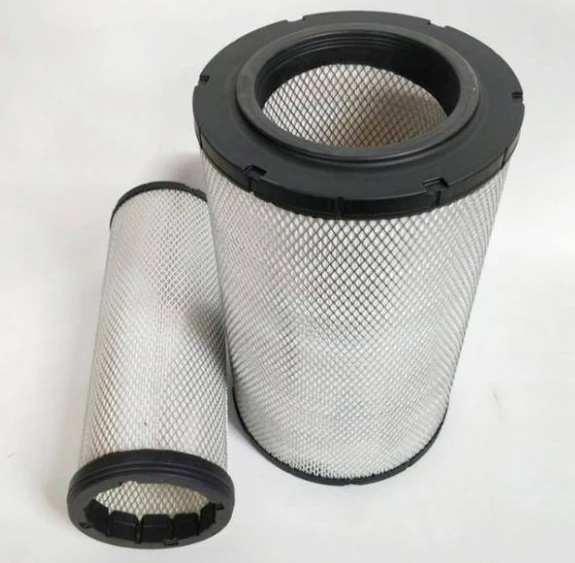
Case 1: Rumbling sound of car air filter
请替换当前内容 support dual-axis calibration compensation, precise control of the amount of glue dispendsed, the error reaches ± 0.02mm
Multi-axis motion system, precise control of dispensing path;
Matching high UPH, realising automatic cleaning of nozzle.Problem description: Users of a certain brand of car models reported that the filter emitted continuous low-frequency noise when idling.
Diagnostic process: Spectrum analysis showed that the main frequency of the noise was 120-150Hz, overlapping with the engine intake pulsation frequency.
Disassembly revealed that the thickness of carbon deposits at the folds of the filter paper reached 2.3mm (standard value <0.5mm), and the intake cross-sectional area was reduced by 38%.
Solution: Optimize the folding angle of the filter element (adjust from 30° to 45°), add a pre-filter, and the complaint rate dropped by 72%.
Case 2: High-frequency abnormal sound of industrial water treatment filter
Problem description: A sewage treatment plant self-cleaning filter had a harsh whistle during backwashing.
Technical detection: Ultrasonic detection found that the pressure dropped to -0.2MPa at the moment the drain valve was opened, causing cavitation.
High-speed camera showed that the water flow formed a vortex at the damaged Self Cleaning Filter Industrial, with a flow rate of 12m/s (design value 8m/s).
Improvement measures: Install a buffer tank to reduce pressure fluctuations; Use gradient density filter (outer layer 80μm/inner layer 20μm), cavitation noise is reduced by 40dB

4. Solutions and technological innovation trends
1. Application of active noise reduction technology
Acoustic interference system: A microphone array is embedded in the filter housing to emit anti-phase sound waves to offset noise in a specific frequency band. Experiments show that the noise reduction rate of 200-500Hz is 90%.
2. Intelligent monitoring upgrade
Internet of Things sensor: Real-time monitoring of pressure difference and vibration spectrum, early warning of blockage risks. After a chemical company adopted this technology, unplanned downtime was reduced by 55%.
3. Material innovation
Nanofiber filter material: The porosity is increased by 15% compared with traditional materials, and the pressure drop is reduced by 30% at the same filtration efficiency, reducing turbulent noise from the source.
4. Structural optimization design
Bionic flow channel: The asymmetric flow channel designed with reference to the branch structure of bird trachea reduces the noise of a gas filter from 78dB to 62dB.
5. Future development trends and industry recommendations
Standardization construction: Promote the formulation of the "Filter Noise Level Classification Standard" to clarify the noise limits in different scenarios.
Full life cycle management: Establish an intelligent reminder system for filter element replacement to avoid chain failures caused by overuse.
Interdisciplinary collaboration: Introduce fluid mechanics simulation and acoustic optimization software to predict noise risks in the design stage.
Conclusion: The solution to the abnormal noise problem of Self Cleaning Filter Industrial requires the involvement of the entire chain from design, operation and maintenance to scrapping and recycling. With the breakthroughs in materials science and intelligent sensing technology, a new generation of silent and adaptive filters will become the core direction of industry upgrades.