

Table of contents
2. Important application areas of stainless steel filter elements
3. Common causes of stainless steel filter element blockage
4. Impact of stainless steel filter element blockage
5. Solutions to stainless steel filter element blockage
7. Future development trends of the industry
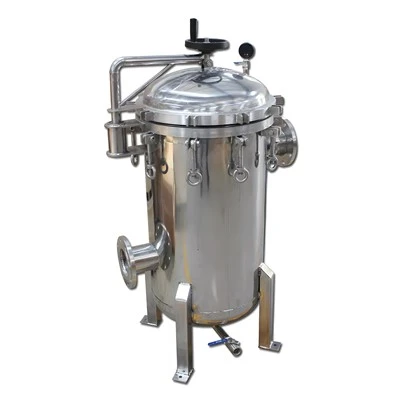
In many industrial fields and daily application scenarios, stainless steel filter elements have become key components to ensure the normal operation of production and life due to their excellent corrosion resistance, high strength and long service life. However, the problem of filter element clogging is always there, which not only affects the filtration efficiency and equipment performance, but may also lead to a series of serious consequences such as production interruption and cost increase. How to effectively solve the clogging problem of stainless steel filter elements has always been the focus of attention in the industry. This article will deeply explore the causes and effects of stainless steel filter element clogging, and introduce the latest solutions and industry development trends in detail.
2. Important application areas of stainless steel filter elements
1. Water treatment field
In the process of tap water treatment, stainless steel filter elements are used to remove impurities, particles, etc. in the water to ensure the safety and quality of residents' water. In industrial water treatment, whether it is the power, chemical or electronics industries, stainless steel filters play an indispensable role in removing various pollutants in the water, preventing equipment scaling and corrosion, and ensuring the stable operation of industrial production. In wastewater treatment, stainless steel filter elements assist in solid-liquid separation, providing strong support for the discharge or reuse of wastewater in compliance with standards.
2. Chemical industry
Chemical production involves various complex chemical reactions and process flows, and has extremely high requirements for the purity of raw materials and products. Stainless steel filter elements are widely used in the fine filtration of chemical raw materials, removing impurities and particles, ensuring the smooth progress of chemical reactions, and improving product quality. At the same time, in the post-processing process of chemical products, stainless steel filter elements are also needed to further purify and purify the products.
3. Food and beverage industry
The production of food and beverages has extremely strict requirements on hygiene and safety. With its good material properties, stainless steel filter elements can meet the strict hygiene standards of the food and beverage industry for filtration equipment. In beverage production, it is used to filter impurities in raw materials such as juice and syrup; in the winemaking process, it removes sediments in the wine to ensure the clarity and taste of the product.
4. Pharmaceutical industry
The pharmaceutical process has strict requirements on the purity and sterility of drugs. Stainless steel filter elements are used in the pharmaceutical industry for filtering and sterilizing drug liquids to ensure the quality and safety of drugs. They are a vital component of the pharmaceutical production line.
3. Common causes of stainless steel filter element blockage
● Material characteristic factors
1. Particle size and shape: Most of the particles of the materials to be filtered are irregular. When there are a large number of particles close to the separation point, if the aperture of the stainless steel filter element is less than or equal to the particle diameter, the particles are easy to get stuck, resulting in blockage. For example, in industries such as ore screening, ore particles have different shapes and are easy to block the stainless steel filter elements of the screen type.
2. Humidity and viscosity: When the material has high humidity and high viscosity, such as the screening process of various wet powder materials, the material is easy to stick to the stainless steel mesh and cause blockage. In some food processing industries, this situation is often encountered when handling wet raw materials.
3. Material problem: If the material is fibrous and has more flaky particles, the woven screen wire is coarse, which is also easy to cause blockage. For example, in the wastewater treatment of the textile industry, wastewater containing fibers may cause the stainless steel filter element to be blocked.
●Filtration system operation factors
1. Unreasonable backwash parameters: For some stainless steel filter equipment with backwash function, unreasonable backwash air parameters (such as too high or too low air pressure, inappropriate air flow) and unreasonable backwash water parameters (such as inappropriate flow and pressure) cannot effectively remove impurities on the filter element, resulting in gradual accumulation of impurities and eventually blockage.
2. Filter material filling problem: Filter material filling exceeds the requirements, which may cause uneven distribution of water flow or air flow, and local filter elements are subjected to excessive pressure and flow, accelerating the occurrence of blockage.
● Environmental factors
1. Temperature change: In some special environments, drastic changes in temperature may cause slight deformation of the material of the filter element, affecting its pore size and structure, making impurities more likely to adhere and clog. For example, in some high-temperature industrial production environments, sudden cooling may cause this situation.
2. Chemical corrosion: If there are corrosive substances in the filtered material or the surrounding environment, the stainless steel filter element may be corroded, and rust or other corrosion products will appear on the surface, which will gradually block the filter channel.
4. Impact of stainless steel filter element blockage
Reduced production efficiency
After the filter element is clogged, the filtration speed decreases significantly, and the time for the material to pass through the filtration equipment is prolonged, resulting in a slower pace of the entire production process. In enterprises with continuous production, this may cause the production line to stop, seriously affecting production efficiency and output.
01
Reduced product quality
The clogged filter element cannot effectively remove impurities from the material, which may cause impurities to mix into the product, affecting the purity, appearance and performance of the product. In industries with strict requirements on product quality, such as electronics and pharmaceuticals, this may result in a large number of defective products, increase production costs and economic losses of the enterprise.
02
Increased equipment loss
In order to maintain the operation of the filtration equipment, when the filter element is clogged, the equipment often needs to increase power to overcome resistance, which will increase the energy consumption of the equipment. At the same time, long-term high-load operation will also accelerate the wear of the equipment, shorten the service life of the equipment, and increase the cost of equipment maintenance and replacement.
03
Increased maintenance costs
Frequent blockages require more frequent maintenance and cleaning work, which not only increases labor costs, but may also require the use of more cleaning equipment and chemicals. Moreover, if not cleaned properly, it may cause further damage to the filter element, requiring premature replacement of the filter element, further increasing maintenance costs.
04
5. Solutions to stainless steel filter element blockage
●Optimize filter element design
1. Improve aperture design: Design a more reasonable aperture distribution according to different material characteristics and filtration requirements. The variable aperture design is adopted. The aperture is larger at the entrance of the filter element, which is convenient for the material to enter quickly. As the filtration proceeds, the aperture gradually becomes smaller, which improves the filtration accuracy and reduces the possibility of particles getting stuck.
2. Surface treatment technology: Through special treatment of the surface of the stainless steel filter element, such as coating technology, the surface has better hydrophilicity or hydrophobicity to reduce the adhesion of materials. For example, a layer of coating with self-cleaning function is applied to make impurities fall off more easily under the action of gravity or water flow.
● Adjust the operating parameters of the filtration system
1. Accurately control the backwash parameters: Determine the optimal backwash air intake parameters and backwash water intake parameters through experiments and data analysis. For example, reasonably adjust the backwash air pressure and air flow so that it can effectively remove impurities without damaging the filter element; accurately control the flow and pressure of the backwash water to ensure the backwash effect while ensuring the stable operation of the equipment.
2. Optimize filter material filling: Strictly follow the design requirements to fill the filter material to ensure that the quantity, quality and filling method of the filter material meet the standards. The method of filling filter materials of different particle sizes in layers can be used to improve the filtration efficiency and uniformity and avoid local blockage.
● Strengthen pretreatment
1. Physical pretreatment: Before the material enters the stainless steel filter element, physical methods are used to pretreat the material. For example, a vibrating screen is used to initially remove impurities of larger particles, or a magnetic separation device is used to remove magnetic impurities in the material to reduce the burden on the filter element.
2. Chemical pretreatment: For some materials with high viscosity, an appropriate amount of chemical agents can be added for pretreatment to reduce the viscosity of the material. When treating some wastewater containing grease, an emulsifier can be added to make the grease easier to be filtered and removed.
●Real-time monitoring and intelligent control system
1. Blockage monitoring technology: Use advanced sensor technology to monitor the blockage of stainless steel filter elements in real time. For example, by monitoring the pressure difference between the inlet and outlet, flow changes and other parameters, signs of blockage can be detected in time. Optical or acoustic detection technology can also be used to directly observe the attachment of impurities on the surface of the filter element.
2. Intelligent control system: Develop an intelligent control system based on monitoring data. When the filter element is detected to have a tendency to clog, the system automatically adjusts the operating parameters of the filter equipment, such as increasing the frequency or intensity of backwashing; if the clogging is serious, the system can automatically switch to the backup filter equipment to ensure the continuity of production, and notify the maintenance personnel to handle it.
● Regular maintenance and cleaning
1. Formulate a scientific maintenance plan: Formulate a scientific and reasonable maintenance plan based on the frequency of use of the filter equipment, material characteristics and other factors. Regularly inspect, clean and maintain the filter elements, promptly discover and deal with potential problems, and extend the service life of the filter elements.
2. Diversified cleaning methods: Use a combination of multiple cleaning methods to improve the cleaning effect. Common cleaning methods include hydraulic cleaning, air washing, chemical cleaning, etc. Hydraulic cleaning uses high-pressure water flow to wash impurities on the surface of the filter element; air washing blows away impurities through high-speed airflow; chemical cleaning uses appropriate chemical agents to dissolve and remove some stubborn pollutants. In actual operation, you can choose a suitable cleaning method or combine multiple methods according to the degree of blockage and the type of impurities.
Hangzhou Hanzhikang Purification Equipment Co., Ltd.

Our company, Hangzhou Hanzhikang Purification Equipment Co., Ltd., is an enterprise specializing in the production, research and development of filtration products. We are committed to providing high-quality air and fluid filtration systems, covering design, manufacturing, sales and service, and are a new type of comprehensive company. We have an experienced technical team, as well as advanced equipment and instruments to ensure that our products meet the highest standards in quality and performance.
Products
At Hangzhou Hanzhikang Purification Equipment Co., Ltd., our products are characterized by high quality and innovative technology to provide customers with reliable filtration solutions.
First of all, we have strict product quality control processes to ensure that every product meets the highest standards. We use advanced production technology and equipment, equipped with an experienced quality management team, and strictly implement quality control standards in every link from raw material procurement to production and manufacturing to final product inspection. Our product manufacturing process follows the ISO9001 quality management system, as well as relevant industry standards and specifications. In addition, we have obtained multiple certifications, such as CE certification, GMP certification, etc., proving that the quality and safety of our products are recognized by authoritative organizations.
Secondly, we are constantly committed to the research and development of innovative technologies to meet the growing needs of our customers. We have a professional R&D team with rich industry experience and technical strength. Through continuous technological innovation and R&D investment, we continue to launch new products and new technologies that meet market needs. We also hold a number of patents in filtration technology, including innovations in product design, manufacturing processes, filter media, etc. The application of these patented technologies enables our products to have higher efficiency, longer service life and more reliable performance, providing customers with a better user experience and greater economic benefits.
In short, Hangzhou Hanzhikang Purification Equipment Co., Ltd.'s products are based on high quality assurance and innovative technology, providing customers with excellent filtration products and solutions. We will continue to work hard to provide customers with better and more reliable products and services, grow together with customers, and achieve mutual benefit and win-win results.

Metal Pleated Filter Element

Metal Sintered Filter Element

Metal Titanium Rod Filter Element

Bag Filter Housing Stainless Steel

Bag Filter Housing

Multi Bag Filter
7. Future development trends of the industry
1. Material innovation
In the future, new stainless steel materials or composite materials will be continuously developed for the manufacture of filter elements. These materials will have better corrosion resistance, higher strength and better filtering performance. For example, stainless steel materials with self-repairing function will be developed, which can automatically repair when the surface of the filter element is slightly damaged or corroded, and maintain good filtering effect.
2. Intelligence and automation
With the continuous development of technologies such as artificial intelligence and the Internet of Things, stainless steel filtering equipment will develop in the direction of intelligence and automation. The intelligent monitoring system will more accurately predict the blockage of the filter element and realize automatic adjustment and control. Automated cleaning and maintenance equipment will greatly reduce manual intervention and improve maintenance efficiency and quality.
3. Integrated solutions
The industry will pay more attention to providing integrated filtering solutions, including not only high-quality filtering equipment and components, but also covering a full range of services such as material pretreatment, system design, installation and commissioning, and maintenance. Enterprises will be more inclined to choose suppliers who can provide one-stop services to reduce management costs and improve the reliability of the overall solution.
The clogging problem of stainless steel filter elements is a long-standing problem that has plagued the industry, but with the continuous advancement and innovation of technology, a series of effective solutions are emerging. The comprehensive application of various measures, from optimizing the design of filter elements, adjusting operating parameters to strengthening pretreatment, adopting intelligent monitoring and regular maintenance, can significantly reduce the clogging frequency of filter elements and improve the operating efficiency and reliability of filtration equipment. At the same time, the future development trend of the industry also provides a broader space and direction for solving this problem. It is believed that driven by material innovation, intelligent automation development and integrated solutions, the clogging problem of stainless steel filter elements will be more effectively solved, providing a strong guarantee for the stable development of various industries. All enterprises and scientific research institutions should pay close attention to industry trends, actively explore and apply new technologies and methods, and jointly promote the progress and development of the stainless steel filtration industry.