

In the complex landscape of industrial filtration, stainless steel filter elements stand as a cornerstone technology, celebrated for their durability, versatility, and exceptional performance. Unlike disposable filter media such as paper or fabric, these robust components offer long-term reliability, making them indispensable across a wide range of sectors-from aerospace and pharmaceuticals to food processing and wastewater treatment. To fully harness their potential, it is essential to delve into their working principles, structural design, application nuances, and future development trends. This article provides a comprehensive analysis, bridging the gap between theoretical mechanics and real-world utility.
The Core Working Principle: How Stainless Steel Filter Elements Achieve Precision Filtration
At the heart of stainless steel filter elements lies a sophisticated interplay of physical mechanisms that collectively trap contaminants while allowing the target fluid (liquid or gas) to pass through. The primary filtration principles include mechanical screening, depth filtration, and adsorption, each contributing to the element's ability to remove particles of varying sizes-from micrometers down to nanometers.
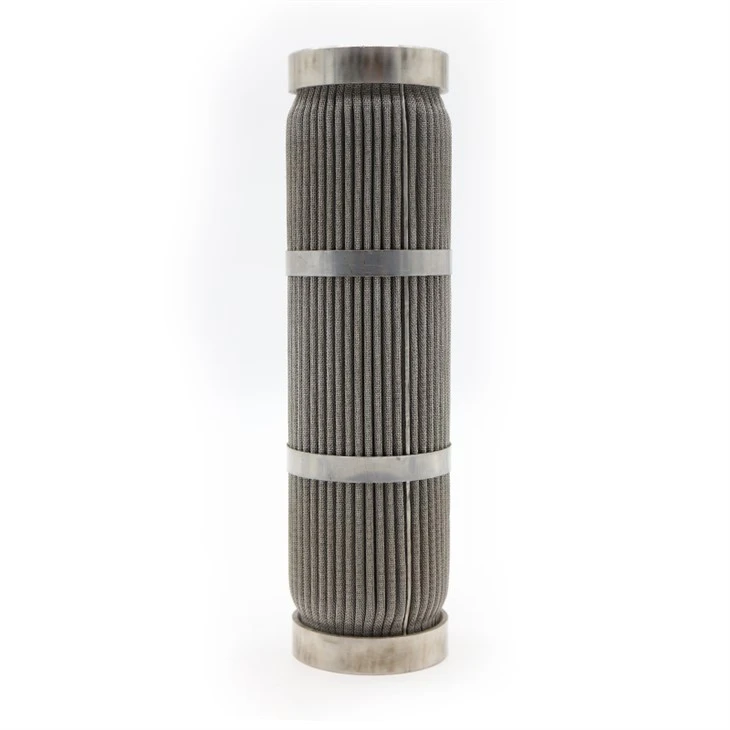
Mechanical screening, the most intuitive mechanism, relies on the precise pore size of the stainless steel structure. During operation, the fluid flows through the filter element, and particles larger than the pore diameter are physically blocked on the surface. This "surface filtration" effect is critical for applications requiring consistent removal of large contaminants, such as sediment in water treatment or metal shavings in hydraulic systems. The key to effective screening lies in the uniformity of the pore size; high-quality stainless steel filter elements, often manufactured via laser drilling or electrochemical etching, ensure minimal variation in pore diameter, preventing bypass and guaranteeing filtration accuracy.
Depth filtration complements surface screening by addressing smaller particles that might pass through the initial pore barrier. Unlike surface filtration, which traps contaminants primarily on the outer layer, depth filtration uses a three-dimensional, porous structure-such as sintered stainless steel or woven mesh-to create a tortuous path for the fluid. As the fluid travels through this network, particles are trapped not only by direct sieving but also by inertial impaction, diffusion, and interception. For example, in compressed air systems, sub-micron oil droplets and moisture are captured within the depth of the filter element, ensuring the output air meets ISO 8573-1 purity standards.
Adsorption, though less prominent, plays a role in removing specific contaminants, such as organic compounds or heavy metals. The surface of stainless steel, especially when treated with special coatings (e.g., activated carbon or ion-exchange resins), exhibits a high affinity for certain molecules. In pharmaceutical water purification, for instance, modified stainless steel filter elements can adsorb trace amounts of endotoxins, ensuring compliance with USP <1231> guidelines.
Several factors influence the filtration efficiency of stainless steel elements, including pore size, flow rate, and operating pressure. Pore size is typically specified in micrometers (μm) or microns, with common ranges from 0.1 μm (for ultra-fine filtration) to 100 μm (for coarse filtration). Flow rate, meanwhile, must be balanced to avoid "channeling"-a phenomenon where high flow velocities create pathways through the filter, reducing contact time with contaminants. Operating pressure, on the other hand, affects the fluid's ability to penetrate the filter; excessive pressure can damage the element, while insufficient pressure may result in low throughput. Manufacturers often provide pressure-drop curves to help users optimize these parameters for their specific applications.
Structural Design And Material Advantages: The Foundation Of Durability And Performance
The structural design and material composition of stainless steel filter elements are engineered to withstand harsh operating conditions while maintaining consistent performance. Unlike plastic or ceramic filters, which are prone to cracking or chemical degradation, stainless steel offers a unique combination of strength, corrosion resistance, and thermal stability-making it ideal for demanding environments.
Material Selection: The Role Of Stainless Steel Alloys
The choice of stainless steel alloy is critical to the filter element's performance. The most common alloys used are 304 stainless steel and 316L stainless steel, each tailored to specific application requirements.
304 stainless steel, composed of 18% chromium and 8% nickel, provides excellent general corrosion resistance and is suitable for non-aggressive fluids, such as water, air, and food-grade liquids. It is cost-effective and widely used in industries like beverage production, where it complies with FDA regulations for food contact.
316L stainless steel, however, is the gold standard for harsh environments. With the addition of molybdenum (2-3%), it offers superior resistance to pitting corrosion caused by chloride-rich fluids, such as seawater, brine, or chemical solvents. It is also low in carbon (<0.03%), reducing the risk of intergranular corrosion when exposed to high temperatures-making it ideal for pharmaceutical sterilization processes (e.g., autoclaving at 121°C) or oil and gas production, where the filter elements may come into contact with corrosive hydrocarbons.
Other specialized alloys, such as duplex stainless steel (2205) or hastelloy, are used in extreme applications, such as nuclear power plants or chemical processing, where resistance to high pressure, temperature, and aggressive chemicals is paramount.
Structural Variations: Tailoring Design To Application Needs
Stainless steel filter elements are available in a variety of structural designs, each optimized for specific flow rates, pressure requirements, and maintenance needs. The most common designs include:
- Sintered Stainless Steel Filter Elements: These are manufactured by compacting and heating stainless steel powder at high temperatures (sintering), creating a porous, monolithic structure. The pore size can be precisely controlled by adjusting the powder particle size and sintering parameters, making them suitable for both surface and depth filtration. Sintered elements are highly durable, resistant to mechanical damage, and can be easily cleaned (via backwashing or chemical cleaning), extending their service life. They are widely used in gas separation, fuel filtration, and catalyst recovery.
- Woven Mesh Filter Elements: Constructed from interwoven stainless steel wires, these elements offer a uniform pore structure and high mechanical strength. The mesh size is defined by the number of wires per inch (mesh count), with higher mesh counts corresponding to smaller pore sizes. For example, a 200-mesh filter has a pore size of approximately 75 μm, while a 1000-mesh filter can achieve pore sizes as small as 13 μm. Woven mesh elements are easy to clean and are commonly used in hydraulic systems, where they protect pumps and valves from particulate contamination.
- Pleated Stainless Steel Filter Elements: To maximize the filtration area within a compact space, some elements are pleated, similar to air filters. Pleating increases the surface area by 3-5 times compared to flat elements, allowing for higher flow rates and longer service intervals. These elements are ideal for applications with high contaminant loads, such as wastewater treatment or industrial process water filtration.
Application Across Industries: Solving Filtration Challenges In Diverse Sectors
The versatility of stainless steel filter elements makes them indispensable across a wide range of industries, where they address unique filtration challenges and ensure process efficiency, product quality, and regulatory compliance.
Pharmaceutical And Biotechnology: Ensuring Sterility And Purity
In the pharmaceutical industry, where even trace contaminants can compromise product safety, stainless steel filter elements play a critical role in ensuring sterility and purity. They are used in the filtration of pharmaceutical waters (e.g., purified water, water for injection), as well as in the final filtration of drugs and biologics.
316L stainless steel elements, with their high corrosion resistance and ability to withstand repeated sterilization (autoclaving, gamma irradiation, or steam-in-place), are the preferred choice. For example, in the production of monoclonal antibodies, sintered stainless steel filters with a pore size of 0.2 μm are used to remove bacteria and mycoplasma, ensuring compliance with FDA and EMA regulations. Additionally, the smooth surface of stainless steel prevents the adsorption of proteins, reducing product loss and ensuring batch consistency.
Oil And Gas: Protecting Equipment And Ensuring Operational Efficiency
The oil and gas industry operates in some of the harshest environments, with high pressures, temperatures, and corrosive fluids. Stainless steel filter elements are used throughout the production, refining, and transportation processes to protect critical equipment and ensure operational efficiency.
- Upstream Production: In wellhead operations, 316L stainless steel filters remove sand, scale, and other particulates from crude oil and natural gas, preventing damage to pumps, valves, and meters. They are also resistant to the high salinity of formation water, reducing the risk of corrosion.
- Downstream Refining: During refining, filter elements remove catalyst fines and other impurities from process streams, ensuring the quality of refined products such as gasoline, diesel, and jet fuel. Sintered stainless steel filters are particularly effective here, as they can withstand high temperatures (up to 500°C) and pressures (up to 10,000 psi).
- Pipeline Transportation: In pipeline systems, filter elements prevent the accumulation of debris, which can cause blockages and reduce flow rates. Their durability ensures long service life, minimizing maintenance downtime.
Water Treatment: Purifying Water For Industrial And Municipal Use
Stainless steel filter elements are widely used in water treatment, from municipal drinking water purification to industrial wastewater recycling. Their corrosion resistance and ability to withstand harsh chemicals make them ideal for this sector.
- Municipal Water Treatment: In drinking water treatment, filter elements remove sediment, algae, and bacteria, ensuring compliance with EPA Safe Drinking Water Act standards. They are often used in conjunction with other treatment technologies, such as coagulation and disinfection, to provide multi-barrier protection.
- Industrial Wastewater Treatment: In industries such as manufacturing, mining, and power generation, stainless steel filters remove heavy metals, oils, and suspended solids from wastewater, allowing for recycling or safe discharge. For example, in electroplating plants, 316L stainless steel filters with a pore size of 1 μm remove heavy metal ions (e.g., chromium, nickel) from rinse water, reducing environmental impact.
- Desalination: In seawater desalination plants, filter elements pre-treat seawater by removing suspended solids and microorganisms, protecting reverse osmosis membranes from fouling. Their resistance to chloride corrosion ensures reliable performance in this high-salinity environment.
Future Development Trends: Innovations Shaping The Next Generation Of Stainless Steel Filter Elements
As industries demand higher filtration efficiency, lower energy consumption, and greater sustainability, the development of stainless steel filter elements is evolving to meet these challenges. Several key trends are shaping the future of this technology:
Nanostructured Coatings For Enhanced Performance
Researchers are developing nanostructured coatings for stainless steel filter elements to improve their filtration efficiency and functionality. For example, coatings of titanium dioxide (TiO₂) or graphene oxide can enhance the element's ability to remove organic contaminants and bacteria via photocatalysis or adsorption. These coatings also reduce fouling, as their ultra-smooth surface prevents the adhesion of particles. In pharmaceutical applications, nanostructured coatings can be tailored to remove specific contaminants, such as endotoxins or viruses, while maintaining high flow rates.
3D Printing For Customized Designs
3D printing, or additive manufacturing, is revolutionizing the design and production of stainless steel filter elements. Unlike traditional manufacturing methods (e.g., sintering or weaving), 3D printing allows for the creation of complex, customized structures with precise pore sizes and geometries. For example, lattice structures can be designed to maximize filtration area while minimizing pressure drop, or hierarchical pore structures can be created to target multiple particle sizes in a single filter. This flexibility enables the development of filter elements tailored to specific applications, such as high-temperature gas filtration or ultra-fine liquid purification. Additionally, 3D printing reduces material waste, making the production process more sustainable.
Integration With Smart Monitoring Systems
The rise of Industry 4.0 is driving the integration of stainless steel filter elements with smart monitoring systems. These systems use sensors to real-time monitor key parameters such as pressure drop, flow rate, and contaminant load, providing users with actionable data to optimize filtration processes and maintenance schedules. For example, in a chemical processing plant, a smart filter element equipped with a pressure sensor can alert operators when the element is becoming clogged, allowing for timely replacement and preventing process downtime. This integration not only improves operational efficiency but also extends the service life of the filter elements, reducing costs and environmental impact.
Focus On Sustainability And Circular Economy
As sustainability becomes a global priority, manufacturers are developing stainless steel filter elements with a focus on the circular economy. Stainless steel is inherently recyclable, with a recycling rate of over 90%, making it a more sustainable choice than disposable filter media. Additionally, manufacturers are designing filter elements that are easier to clean and reuse, reducing waste. For example, some sintered stainless steel elements can be cleaned via backwashing, chemical cleaning, or ultrasonic cleaning, allowing them to be reused multiple times. This not only reduces the environmental footprint but also lowers the total cost of ownership for users.
Conclusion
Stainless steel filter elements are a vital technology in modern industrial filtration, offering a unique combination of durability, efficiency, and versatility. From their core working principles-rooted in mechanical screening, depth filtration, and adsorption-to their tailored structural designs and material advantages, these elements are engineered to meet the diverse needs of industries ranging from pharmaceuticals and food processing to oil and gas and water treatment. As technology advances, innovations such as nanostructured coatings, 3D printing, and smart monitoring systems are poised to further enhance their performance, while a focus on sustainability is ensuring they remain a responsible choice for the future. By understanding the principles, applications, and trends of stainless steel filter elements, industries can harness their full potential to improve process efficiency, product quality, and environmental sustainability.