

Water Filter Cartridges are consumable components, but their influence on a filtration system extends far beyond the filter media itself. Cartridge dimensions, end-cap construction, sealing, material compatibility, filtration performance, and manufacturing consistency can all affect how reliably a cartridge operates after installation.
This becomes more important when cartridges are purchased in large quantities. A sample may pass an initial evaluation, while variations between production batches can later lead to installation problems, inconsistent filtration results, leakage, shortened service life, or difficulties with replacement supply.
For distributors, filtration equipment manufacturers, system integrators, and industrial procurement teams, evaluating a Water Filter Cartridge therefore requires more than comparing filtration ratings and unit prices. The following nine factors provide a practical framework for evaluating cartridge quality and supplier capability.
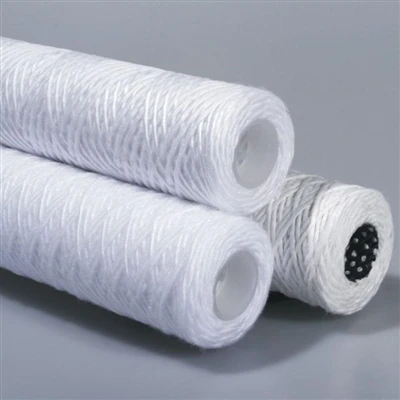
Cartridge Dimensions Must Match the Filter Housing
The first consideration is physical compatibility. A cartridge may have the required filtration function but still be unsuitable for an existing filtration system if its dimensions or connection structure do not match the housing.
For distributors, this issue is especially important because a dimensional mismatch may affect an entire batch rather than a single unit.
Procurement Risk
Incorrect physical specifications can result in:
- Installation failure
- Leakage around the sealing area
- Bypass around the filter element
- Additional modification costs
- Returned products
- Delayed equipment commissioning
When hundreds or thousands of cartridges are purchased, a small dimensional error can become a large inventory problem.
Procurement Evaluation Criteria
The purchasing specification should define:
- Overall cartridge length
- Outside diameter
- Inside diameter
- End-cap dimensions
- Connection configuration
- Seal or gasket dimensions
- End-cap construction
- Housing compatibility
- Dimensional tolerances
The buyer should provide an existing cartridge sample, technical drawing, or housing interface information whenever possible.
The important control point is sample and drawing approval before mass production. Once the dimensions and connection structure are approved, they can serve as the reference for production and inspection of subsequent batches.
This reduces the risk of receiving cartridges that meet a general catalog description but cannot be installed directly into the customer's existing system.
Batch Consistency Is as Important as Initial Sample Performance
A Water Filter Cartridge is rarely purchased only once. Distributors and equipment manufacturers may need the same cartridge specification repeatedly over months or years, making batch-to-batch consistency a critical quality factor.
Changes in filter media, component dimensions, assembly conditions, or other production factors can affect filtration results, pressure-drop behavior, service life, and replacement frequency. For distributors selling cartridges under the same product code, these variations can also create customer complaints and make field problems more difficult to trace.
A more effective quality-control approach is to connect raw materials, component production, assembly, inspection, and final shipment under one defined product specification. Approved materials, dimensions, filtration requirements, sampling methods, acceptance criteria, packaging requirements, and change-control procedures should provide a consistent reference for every production batch.
This is particularly relevant to manufacturers serving repeat-order markets. A successful sample demonstrates that a product can be made once; a controlled specification demonstrates that the same product can be reproduced.
Material Selection Goes Beyond the Filter Media
The filter media is the main filtration component, but it is not the only material that interacts with the treated water. End caps, support structures, seals, bonding materials, and other cartridge components can also affect water compatibility and service performance.
Material selection should consider the actual operating environment. Water chemistry, temperature, pressure, filtration requirements, and applicable regulatory conditions can all influence whether a particular material construction is appropriate.
Incorrect material selection may result in degradation, swelling, deformation, seal failure, media damage, or reduced service life. These problems may not be visible during a basic appearance inspection, which is why material requirements should be defined before sample approval rather than treated as a secondary specification.
For customized filtration products, the buyer should provide the manufacturer with relevant application information. This allows the cartridge construction to be evaluated against the actual service conditions instead of being selected solely according to appearance or a general catalog description.
Quality Inspection Should Focus on Critical Product Characteristics
A statement that a manufacturer performs quality control does not explain what is actually being checked. For bulk Water Filter Cartridge production, inspection should be connected to the characteristics that influence installation, filtration, sealing, integrity, and transportation.
Depending on the cartridge construction and application, inspection may cover dimensions, appearance, filter media construction, end-cap assembly, sealing condition, connection dimensions, filtration performance, pressure-related performance, leakage or integrity requirements, and packaging condition.
Not every cartridge requires the same inspection program. The appropriate approach is to identify the critical characteristics of the specific product and establish a corresponding verification method and acceptance criterion.This creates a clearer basis for bulk-order acceptance. Instead of relying on a general statement such as "100% QC," the buyer and manufacturer can agree in advance on what will be inspected, how it will be inspected, and what constitutes an acceptable result.
OEM and ODM Require More Than Changing the Product Label
Water Filter Cartridge customization can involve much more than adding a private label. Distributors and filtration equipment manufacturers may require custom dimensions, different filter-media configurations, customized end caps, existing-housing compatibility, customized packaging, or replacement cartridges matching an existing product.
The main challenge is maintaining the customized specification in future production. A supplier may successfully produce an initial sample but later introduce changes in materials, dimensions, construction, or packaging that affect compatibility with the original system.
For this reason, OEM/ODM projects should establish a complete product definition covering the drawing, material specification, filtration requirements, end-cap configuration, packaging, labeling, and inspection criteria.A controlled product definition turns customization from a one-time production adjustment into a repeatable manufacturing specification. This is particularly important for replacement cartridges that must remain compatible with equipment already in the field.
Packaging Is Part of Product Quality
A cartridge can pass factory inspection and still arrive in poor condition after international transportation. Packaging therefore needs to be considered as part of the supply specification rather than as an afterthought.Individual or bulk packaging, inner protection, carton strength, palletization, moisture protection, product identification, batch identification, and outer-carton labeling can all affect how the cartridges arrive at the destination.
Packaging also influences warehouse utilization and container loading. For large shipments, the actual carton dimensions and pallet configuration should be confirmed before shipment planning. Estimating loading capacity only from the cartridge dimensions can produce inaccurate freight calculations.
A suitable packaging specification should therefore protect the cartridge while also taking into account handling, storage, container utilization, and the buyer's labeling requirements.
After-Sales Support Should Include Batch Traceability
Quality management does not end when a shipment leaves the factory. If a bulk shipment contains thousands of cartridges, a quality issue after delivery needs to be investigated at the batch and product-configuration level.
A structured response should make it possible to identify the affected product, collect defect information, trace the relevant batch, investigate the cause, and determine an appropriate corrective action. Without this information, the buyer may have difficulty determining whether the problem affects one batch or a broader product specification.Batch identification and product records therefore play an important role in after-sales support. They allow manufacturers and buyers to investigate problems more precisely instead of treating an entire product range as one group.
For long-term procurement, the supplier's after-sales process should be considered together with product specifications, inspection records, and batch information. This creates a more practical framework for handling complaints, replacements, and corrective actions.
How Should Buyers Evaluate a Water Filter Cartridge Manufacturer?
Evaluating a cartridge manufacturer requires looking at the entire supply chain rather than focusing on a single technical parameter.
-
Filtering requirements and housing compatibility: Confirm that the cartridge matches the intended filtration application and existing housing.
- Cartridge construction: Review dimensions, filter media, materials, end-cap structure, sealing, and filtration specifications.
- Sample and production consistency: Convert the agreed requirements into an approved sample and a clearly defined production specification.
- Quality inspection: Check whether the manufacturer has suitable inspection standards for dimensions, materials, filtration performance, sealing, and product integrity.
- OEM/ODM capability: Evaluate whether the supplier can support customized dimensions, materials, packaging, labeling, and replacement requirements.
- MOQ and lead time: Confirm minimum order quantities, sample lead times, mass-production schedules, repeat-order lead times, and production capacity.
- Packaging and documentation: Review packaging protection, product identification, batch traceability, certifications, and compliance documents.
- After-sales support: Confirm whether the supplier can provide technical assistance, batch investigation, replacement support, and corrective actions when needed.
For distributors and filtration equipment manufacturers, the most important result is a repeatable specification that can be reproduced, inspected, shipped, and replenished over time. A lower initial quotation does not compensate for incompatible dimensions, inconsistent batches, unstable lead times, or inadequate after-sales support.
About Us
Hangzhou Hanzhikang Purification Equipment Co., Ltd. has developed its capabilities through long-term experience in the water purification industry. Its manufacturing scale, product range, and international market coverage support the production and supply of Water Filter Cartridges for distributors, filtration equipment manufacturers, and system integrators.
Manufacturing & Quality Control
Hanzhikang controls materials, dimensions, filtration performance, assembly, and final inspection throughout Water Filter Cartridge production. For bulk and customized orders, quality is evaluated against approved specifications, drawings, samples, materials, filtration requirements, and inspection standards to maintain consistency across initial production, repeat orders, inspection, and future supply.
OEM/ODM & Customer Service
Hanzhikang supports OEM/ODM Water Filter Cartridge projects based on customer requirements, including custom dimensions, filtration configurations, end-cap structures, housing compatibility, labeling, and packaging, with product specifications confirmed through drawings, samples, application requirements, and material standards before mass production. We also support MOQ, lead time, packaging, documentation, shipment arrangements, repeat orders, and technical and after-sales service based on product specifications and batch information.

15+
Years Experience
10,000+
㎡ Facility
50+
Countries Served
500+
Product Models