

With the popularity of household water purification equipment, the issue of filter replacement has gradually become the focus of consumers. As the "heart" of the water purifier, the replacement cycle of the filter directly affects the water quality safety and equipment life. However, there are many suggestions on filter replacement in the market, and users are often confused about whether to "replace by time" or "replace by status". This article cuts in from the perspectives of filter type, judgment criteria, cost impact, etc., and combines real cases and industry experience to provide consumers with practical guidelines.
Contents
1. Differences in filter type and replacement cycle
2. How to judge whether the filter needs to be replaced?
3. The impact of water quality and frequency of use on the cycle
4. Common misunderstandings and cost traps of users
5. Future trends: intelligence and environmental protection
1. Differences in filter type and replacement cycle
Water purifier filters are usually divided into four levels, each with different functions and significant differences in replacement cycles:
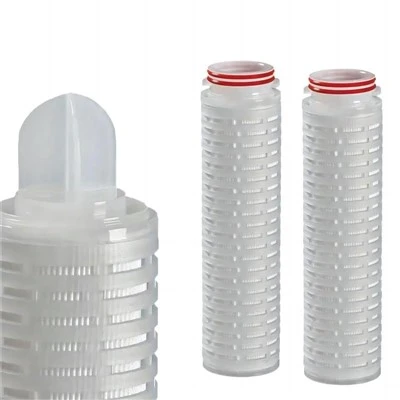
First level: PP cotton filter
PP cotton filter is like the first line of defense of the water purifier, mainly responsible for intercepting large particles of impurities such as mud, sand, and rust. Its material is usually polypropylene melt-blown filter element, which has good filtering performance and corrosion resistance. When water flows through the PP cotton filter element, larger particulate impurities will be intercepted on the surface of the filter element, thereby preventing them from entering the subsequent filtering link and protecting other filter elements from damage.
Generally speaking, the recommended replacement cycle of PP cotton filter elements is 3-6 months. This is because under normal use, the PP cotton filter element will gradually accumulate a large amount of impurities, resulting in a decrease in filtration efficiency. If the water quality is poor, such as the high sand content of tap water in the south, or the aging of water pipes in some old communities, and there are more impurities such as rust in the water, then the replacement cycle of the PP cotton filter element needs to be shortened to 2-4 months. For example, in some southern coastal cities, due to the proximity to rivers or oceans, the sand content of tap water is relatively high, and the PP cotton filter element may be blocked by silt in about 2 months, resulting in a significant reduction in water output, and it needs to be replaced in time.
Second level: activated carbon filter element
Activated carbon filter elements are divided into two types: granular activated carbon and compressed activated carbon. Their main function is to adsorb residual chlorine, odor and some organic pollutants in water. Activated carbon has a huge specific surface area and can adsorb harmful substances in water on its surface by physical adsorption.
The recommended replacement period for ordinary activated carbon filters is 6-12 months. As the use time increases, the adsorption capacity of activated carbon will gradually become saturated. When it reaches a certain level, it can no longer effectively adsorb harmful substances in the water. Silver-loaded activated carbon (antibacterial type) adds silver ions to ordinary activated carbon, has antibacterial function, can effectively inhibit the growth and reproduction of bacteria, and its replacement period can be extended to 12-18 months. For example, in some areas with good water quality and low residual chlorine content, the service life of silver-loaded activated carbon filters may be longer.
Level 3: RO membrane/ultrafiltration membrane
RO membrane (reverse osmosis membrane) and ultrafiltration membrane are the core filtering components of water purifiers. They have high filtration accuracy and can remove heavy metals, bacteria, viruses and other tiny impurities in water.
RO membrane has the highest filtration accuracy and can intercept almost all impurities in water, allowing only water molecules to pass through. However, due to its high filtration accuracy, it is easily blocked by impurities in the water, so the normal service life is 18-36 months. In areas with poor water quality, such as some areas with serious industrial pollution, the heavy metal and impurity content in the water is high, and the service life of the RO membrane will be significantly shortened, and may need to be shortened to 12-24 months. For example, in an industrial city, due to the pollution of water sources caused by sewage discharged by surrounding factories, the RO membrane in the homes of local residents became clogged after 12 months of use, and the filtration effect was significantly reduced.
Ultrafiltration membrane is mainly used to filter microorganisms. Its filtration accuracy is lower than that of RO membrane, but the filtration flux is larger, and the replacement cycle is slightly longer, about 24-36 months. Ultrafiltration membrane can effectively remove bacteria, viruses and some large molecular organic matter in water, but the removal effect of some small molecular heavy metals and soluble salts is relatively poor.
Level 4: Post-activated carbon
The main function of post-activated carbon is to improve the taste of water, remove odors and tiny impurities that may remain in the water, and make the water sweeter and more delicious. Due to its relatively low working intensity, the replacement cycle is the longest, usually 12-24 months. Post-activated carbon can further improve the quality of drinking water, allowing consumers to enjoy a better taste.
2. How to judge whether the filter needs to be replaced?
Relying solely on time or instructions may not be scientific enough, and it needs to be combined with the actual status:
Sudden decrease in water output
When the water flow becomes thinner and even cannot fill a cup of water, it may be that the pre-filter is blocked or the RO membrane is aged.
Water quality changes
The taste becomes worse: such as residual chlorine smell, indicating that the activated carbon filter is invalid.
TDS value increases: measured with a test pen, if the TDS of water after RO membrane filtration exceeds 50mg/L, it needs to be replaced.
Filter appearance inspection
PP cotton turns yellow and activated carbon turns black, which are both blockage signals. Some high-end models are equipped with LED lights or APP reminder functions, which can intelligently monitor the status of the filter.
Misunderstanding: Some users think that "if the filter is not dirty, it will not be replaced", but in fact, activated carbon will release pollutants after adsorption saturation, which will harm health.
3. The impact of water quality and frequency of use on the cycle
Water quality differences
Northern region: high water hardness (more calcium and magnesium ions), which can easily lead to scaling of RO membranes, and the replacement cycle needs to be shortened.
Southern region: more rain, old pipe network, high impurities and residual chlorine content, and faster loss of activated carbon filter elements.
Frequency of use
The greater the daily water consumption of a household, the higher the filter load. For example, a family of 4 uses more than 10 liters of water per day and needs to be replaced 30% earlier than a family of 2.
Data comparison: The life span of the same brand of RO membrane in areas with good or bad water quality can vary by 1.5 times.
4. Common user misunderstandings and cost traps
Misunderstanding 1: All filter elements are replaced simultaneously
In fact, the post-activated carbon and RO membrane can be used independently for a longer time, and there is no need to replace them with the pre-filter element.
Misunderstanding 2: Low-priced filter elements save money
Non-original filter elements may have poor sealing, leading to bacterial growth. For example, after a user purchased counterfeit PP cotton, the water from the water purifier had an odor.
Cost calculation
Economical solution: Choose a large-flux RO membrane (such as 1000G), the cost of a single replacement is about 500 yuan, but if it is replaced once every 3 years, the total cost will be lower.
Worry-free solution: Subscribe to brand filter service, the average annual cost is about 800 yuan, including installation.
5. Future trends: intelligence and environmental protection
Intelligent monitoring technology
The new model uses sensors to monitor the filter pressure and flow in real time, with an error rate of less than 5%.
Renewable filter element
Some companies have developed ceramic filter elements, which can be reused through high-temperature disinfection, and the life span can be extended to more than 5 years.
Environmental recycling plan
Brands such as Haier and Midea have launched filter element recycling plans, and users can deduct the cost of new filter elements by sending back old filter elements.
Summary
Filter element replacement is not a "one-size-fits-all" approach, and it requires comprehensive water quality, usage habits and equipment status. Consumers can self-check by "looking, measuring and listening": observing the color of the filter element, testing water quality data, and listening to changes in water flow. In the future, with technological advances, filter element replacement will become more personalized and sustainable. Remember, regular maintenance is not only responsible for your health, but also protects your equipment investment.
FAQ
1. What is it and what is it used for?
A: It is a water filter cartridge made of polypropylene fibers, which can effectively remove sediment, sand, rust, and other particles from water. It is commonly used in residential, commercial, and industrial settings as a pre-filter or post-filter for RO systems, UV systems, sediment filters, and other water treatment equipment.
2. How often should I replace it?
A: The replacement frequency of the PP filter 20 inch depends on several factors, such as the quality of the source water, the flow rate, the pressure, and the usage volume. As a general guideline, it is recommended to replace the PP filter 20 inch every 3 to 6 months for average use, or sooner if you notice a decrease in flow or pressure, or a change in water quality. Always follow the manufacturer's instructions and consult a professional if you are not sure.
3. How do I install and maintain it?
A: The installation and maintenance of the PP filter 20 inch may vary depending on the type and model of the filter and the system it is used with. However, here are some general tips:
- Make sure the water source is shut off and the pressure is released before installing or replacing it.
- Check if the filter is compatible with the filter housing and the fittings and adapters used.
- Install the filter according to the flow direction and the arrows marked on the filter.
- Tighten the housing and the fittings as instructed, but do not overtighten or cross-thread them.
- Flush the filter with a few gallons of water to remove any loose particles or carbon fines before using it.
- Monitor the performance and quality of the water regularly, and replace the filter as needed.
- Dispose of the used filter properly, according to the local regulations.