

Cartridge filters play a pivotal role in various industrial and commercial applications, ensuring the purification of fluids by removing contaminants. To fully understand their functionality, it is essential to delve into filtration basics, the different types of cartridge filters, and their structural characteristics.
Content
1. Filtration principle
2. Types of filter elements
3. Classification by filter structure
1.1 Definition Of Filtration
Filtration is the process of separating particulate matter of specific particle sizes (or all sizes) from a fluid (liquid or gas) using a filter medium. A filter medium is a device containing filter elements, and the operation aims to improve the quality of the fluid. There are two main purposes for using filters: improving product value and enhancing production and treatment efficiency.
1.2 Improvement In Product Value
- Quality Enhancement: Filtration can improve the appearance, performance, safety, and stability of products. For example, in the food and beverage industry, it removes suspended solids, ensuring the clarity and purity of products. In the pharmaceutical industry, it eliminates particulate matter to meet strict quality standards, guaranteeing the safety and efficacy of drugs.
- Contaminant Removal: It helps in the removal of harmful substances. For instance, activated carbon filters can adsorb organic compounds like chlorine, pigments, and odors in water treatment, improving the taste and quality of drinking water. Also, removing particulate matter from industrial gases can prevent equipment damage and product contamination.

1.3 Improvement In Production And Treatment Efficienc
- Resource Optimization: By improving product yield, saving raw materials, and enabling the recycling of resources, filtration contributes to efficient production. In a manufacturing process where water is reused, cartridge filters can remove contaminants, allowing the water to be recycled, thus reducing water consumption.
- Process Stability: It ensures the cleanliness of fluids in systems such as cooling water circuits. Clean cooling water helps maintain the efficiency of heat exchangers, preventing scale formation and corrosion, which in turn leads to more stable operation of the entire production process.
- Wastewater Treatment: Effective filtration can reduce the load of pollutants in wastewater, making treatment more efficient. This is crucial for environmental protection and compliance with discharge regulations.
2. Types Of Cartridge Filters
2.1 Classification By Filtration Model (Mechanism)
- Surface Filtration: This type traps particles on the surface of the filter medium. The filter medium has a specific pore size, and particles larger than the pores are left behind, while smaller particles pass through. It is effective for removing relatively large and uniform particles and is commonly used in applications where the fluid needs to be clear of visible contaminants.
- Depth Filtration: Here, particles are trapped inside the filter medium. The filter medium has a tortuous path, and particles are captured as they move through the medium. It is suitable for removing a wide range of particle sizes, including smaller particles that can penetrate surface filters. Depth filters are often used in pre - filtration steps to protect more sensitive downstream filters.
- Cake Filtration: In this mechanism, the filter medium initially allows fluid to pass through, and as particles are deposited on the surface, a "cake" of particles forms. This cake then acts as a secondary filter, further removing particles from the fluid. It is commonly used in applications where a high - level of filtration is required, and the cake can be periodically removed or replaced.
2.2 Classification By Trapped Particle Size
- Conventional Filtration: It targets particles of several micrometers to several hundred micrometers in size. This is suitable for removing visible impurities such as mold, pollen, and sand. Cartridge filters made of metal mesh, felt, or non - woven fabric are often used for this type of filtration.
- Microfiltration: The filtration range is for particles and microorganisms of 0.1 μm to several micrometers. Non - woven fabrics and membranes are used as filter media. It is widely used in the food and beverage industry for clarifying liquids and in the pharmaceutical industry for removing bacteria.
- Ultrafiltration: Positioned between microfiltration and reverse osmosis, ultrafiltration can filter molecules with a molecular weight of several thousand to several hundred thousand Daltons. It can remove particles as small as 0.01 μm. Membranes are used as filter media, and it is commonly used in water treatment for removing colloidal particles, proteins, and viruses.


2.3 Classification By Form
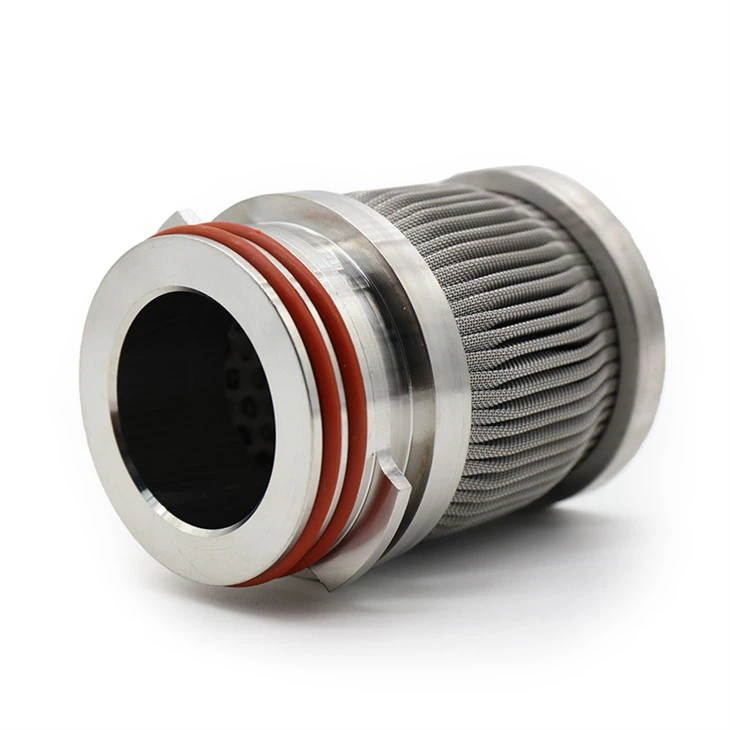
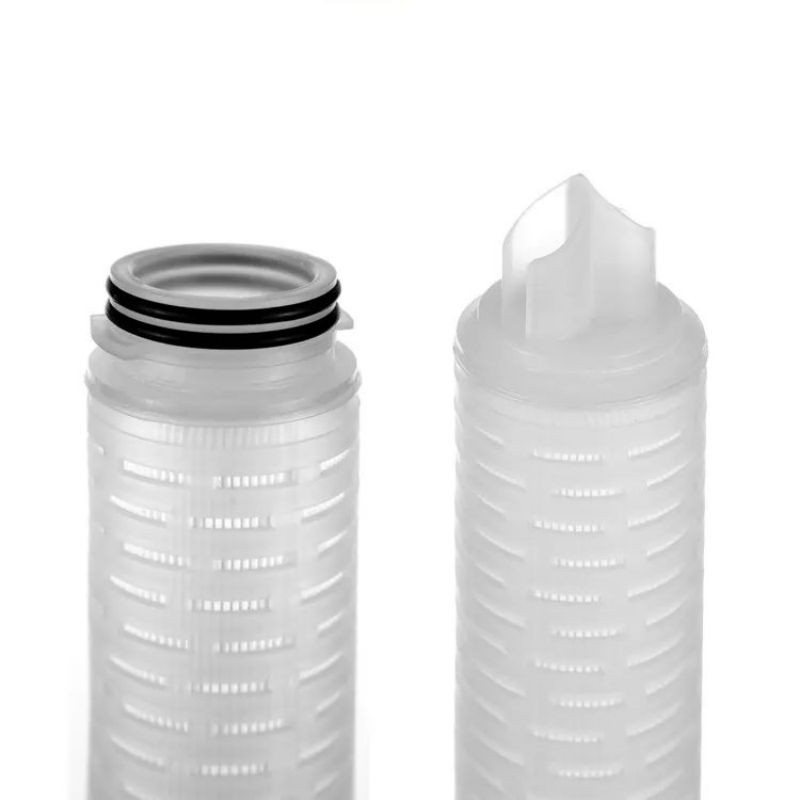
- Cartridge - type Filters: The filter is placed in a tank in the form of a cartridge, which can be made of various materials such as natural fiber, synthetic fiber, ceramic, and metal. This type is easy to replace and is widely used in different applications, from domestic water filtration to industrial processes.
- Bag - type Filters: Non - woven fabrics are sewn into a bag shape, and fluid flows from the inside to the outside of the bag. The removed materials are trapped in the bag. They are often used in applications where a large amount of fluid needs to be filtered, and the bag can be easily replaced when clogged.
2.4 Classification By Separation Function
Some filters have enhanced separation efficiency by using special filter media or additional separation functions. For example, activated carbon filters not only remove particulate matter but also adsorb and separate organic substances like chlorine, pigments, and odors in liquids. This dual - function makes them valuable in applications where both particulate and organic contaminant removal is required.
3. Classification By Structure Of Filter
3.1 Depth Filter
A depth filter is a non - woven fabric - laminated type in which non - woven fabrics are wound on a roll. It has a porous structure with tortuous channels, allowing fluid to flow through while particles are trapped within the medium. The filter medium can be made of plastic or metal fibers, and it is suitable for pre - filtration in many industrial processes to remove a wide range of particle sizes.
3.2 Pleated Filter
Pleated filters are folded to increase the filtration area. They can be made of non - woven fabric, membrane, or metal mesh. The pleated structure provides a large surface area in a compact space, making them highly efficient for removing small particles. Membrane pleated filters, in particular, are used in applications requiring high - purity filtration, such as in the pharmaceutical and electronics industries.
3.3 Bag Filter
As mentioned earlier, bag filters use non - woven fabrics sewn into a bag shape. Fluid flows from the inside to the outside of the bag, and contaminants are trapped in the bag. They are relatively simple in structure and are commonly used in industrial applications for large - scale fluid filtration, such as in wastewater treatment plants and chemical processing industries.
In conclusion, understanding the fundamentals of filtration, the different types of cartridge filters, and their structures is crucial for selecting the right filter for a specific application. Whether it is for improving product quality, enhancing production efficiency, or ensuring environmental compliance, cartridge filters offer a versatile solution based on their unique characteristics. By considering the filtration mechanism, trapped particle size, form, separation function, and structure, industries can optimize their filtration processes and achieve desired results.