

Maintaining food quality is crucial in the food processing industry, and filtration can play a large role in reducing spoilage. Implementing suitable filtration solutions helps to keep food and beverages fresher for longer, increasing shelf life and ensuring product quality.The most commonly used type of filtration technology is mechanical filtration. Other types of filtration technologies include RO , nanofiltration, and ultrafiltration.
Filtration can be used to remove physical, chemical, and biological contaminants as well as microorganisms. It is widely used in the food and beverage industry to remove contaminants from raw materials, products, and packaging.
This article will introduce the filtration process and industry standards for filtration systems. It will also describe how filtration can benefit the food and beverage industry.
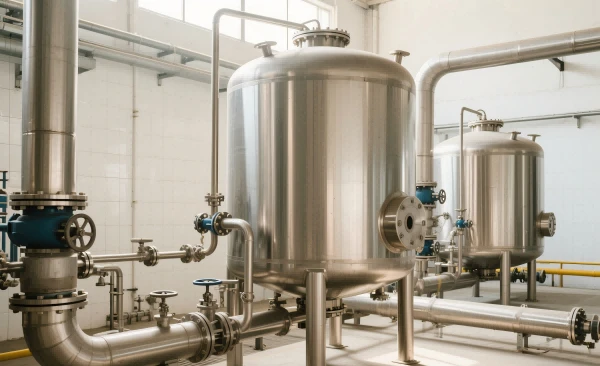
The filtration process in any beverage production
The food and beverage industry faces enormous challenges as consumers and legislators demand ever-increasing levels of safety and quality control. High cleanliness standards and strict contamination control effectively ensure the production of high-quality products, significantly reduce waste and minimize product spoilage.
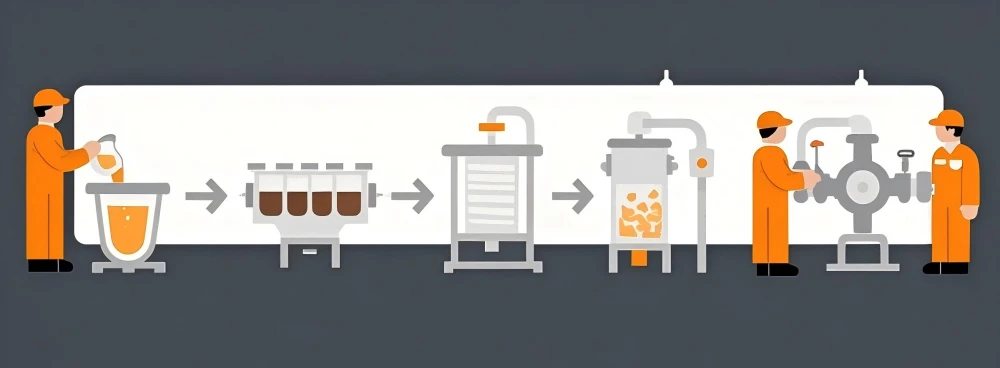
Filtration is a critical step in beverage production. It provides a safe and economical way to remove impurities and extend the shelf life of many consumer products. Proper filtration systems are essential to ensure product biosafety, quality, and shelf life, and to protect process equipment.
There are 3 main filtration stages:
Pre-filtration
Pre-filtration refers to the removal of unwanted large particles (coarse
filtration) so that the filter material is clearly visible. For example, in the
production process of soda water, some of the raw materials used may
contain particles that affect the quality and appearance of the final
product. This process can use the bag filter housing with a filter bag and
depth filter element provided by Brother Filtration, such as melt blown filter
element and wire wound filter.


Fine filtration
Fine filtration refers to the use of pleated filter cartridges with a filtrationaccuracy of 1 to 33 microns according to the beverage composition (solidcontent, turbidity, microorganisms). Polypropylene and glass fiber pleatedelements feature low-pressure drop, high load capacity and efficiency.Glass fiber pleated filters are also good for removing smog because of theinherent positive charge of the media.
Sterile filtration
Sterile filtration is the final filtration step before bottling to clarify
beverages and remove residual yeast and microbial contaminants.
Potentially infectious pathogens such as Cryptosporidium, Giardia lamblia,
diatomaceous earth, and diatom flour are prime targets for removal as
they can cause bottle fermentation, cloudiness, and interfere with beverage
preservation. 0.45 or 0.2 micron pleated membrane filter removes
microbial contaminants.

In addition to these three main filtration steps, compliance with beverage quality and regulations is equallyimportant. The threshold of the beverage industry is constantly increasing, and the requirements for theproduction technology and product quality of beverages are also strict.
Our Filtration provides optimized filtration solutions and products for the production of different beverageproducts, improving product quality while reducing production and operation costs.
How Does Filtration Benefits the Food and Beverage Industry?
Filtration has many benefits and plays a key role in maintaining food freshness, extending product shelf life, andenhancing or improving food flavor. As such, all aspects of the food and beverage industry rely on it extensively.Examples of how filtering technologies are used and benefited from in these industries are as follows:
Wine production
Consumers gravitate toward robust, clear wines free from sediment and cloudiness. filtration technigues used inwine production include clarification or trap filtration, which removes earthy fines and particles and "polishes" thewine.
Fine filtration, which removes yeast and is often used as a pre-sterilization process. Sterile membrane filtrationwhich removes spoilage microorganisms.
Beer production
Beer filtration is centered on the continuous removal of particles that can negatively affect the appearance andflavor of the final product.
Beer filtration involves many steps, going through clarification and fine filtration similar to wine, with closeattention paid to the final clarification and bottling steps. Sterilization processes used in beer production includesterile membrane filtration and cold stabilization.
Other drinks
Beverage filtration in most industries is similar, there are just a few different steps that make them different.The main thing we look for when examining beverage filters is their ability to maintain a safe, drinkable productwhile removing large particles and sediment that can cause health safety concerns and off-taste.Soda, water, and juice all use methods similar to beer and wine filtration to distribute a product that consumerswill continue to enjoy.
Dairy and Food Processing
The filtration process in the dairy and food processing industries is very similar and processes filtration in steps.Water filtration this step is more used for the sterilization of equipment and the containers used to hold and storethe product. Clean, uncontaminated water helps stabilize end products and extend their shelf life.
The pre-filter provides protection and enhances the capabilities of the main filter. In other stages similar to thebeverage industry, such as clarification, filtration and clarification control to ensure the health and taste of thefood.
Food & Beverage Industry Standards for Filtration Systems
In the food and beverage processing industry, the hygiene and quality of the components involved in the filtrationprocess are at the forefront.
Apart from the superior quality of our filter media, Brother Filtration has always met high standards, our pursuithas always been to manufacture high quality products, not only our products meet the high demands but also ourfactories are certified.
Our products have obtained the following certifications:
- FDA certified melt blown filter cartridge, high flow cartridge filter, pleated filter cartridge, string wound filtercartridge. Ultra H high flow cartridge filter, 304 stainless still filter housing
- PED-certified bag filter housing and cartridge filter housing
- IS09001 certified Brother Filtration Equipment Trading (Wuhan) Co., Ltd.
- NSF certified Brother Filtration Equipment Trading (Wuhan) Co., Ltd.
Conclusion
Filtration has always been an important part of the food and beverage industry, keeping food fresh and safe forconsumers. The industry relies heavily on the separation of liquids and solids through membranes (porousmaterials) using filtration systems. it helps remove contaminants from food and beverage products and also helpsimprove the quality of these products.
Hangzhou Hanzhikang Purification Equipment Co., Ltd. Filtration designs and manufactures containers and filter elements for the beverage industry and iscommitted to providing high performance filtration systems and products designed to meet the highest qualitystandards and the most stringent industry reauirements, Contact us todav for more information or to reauest aquote.