


Structure and Materials
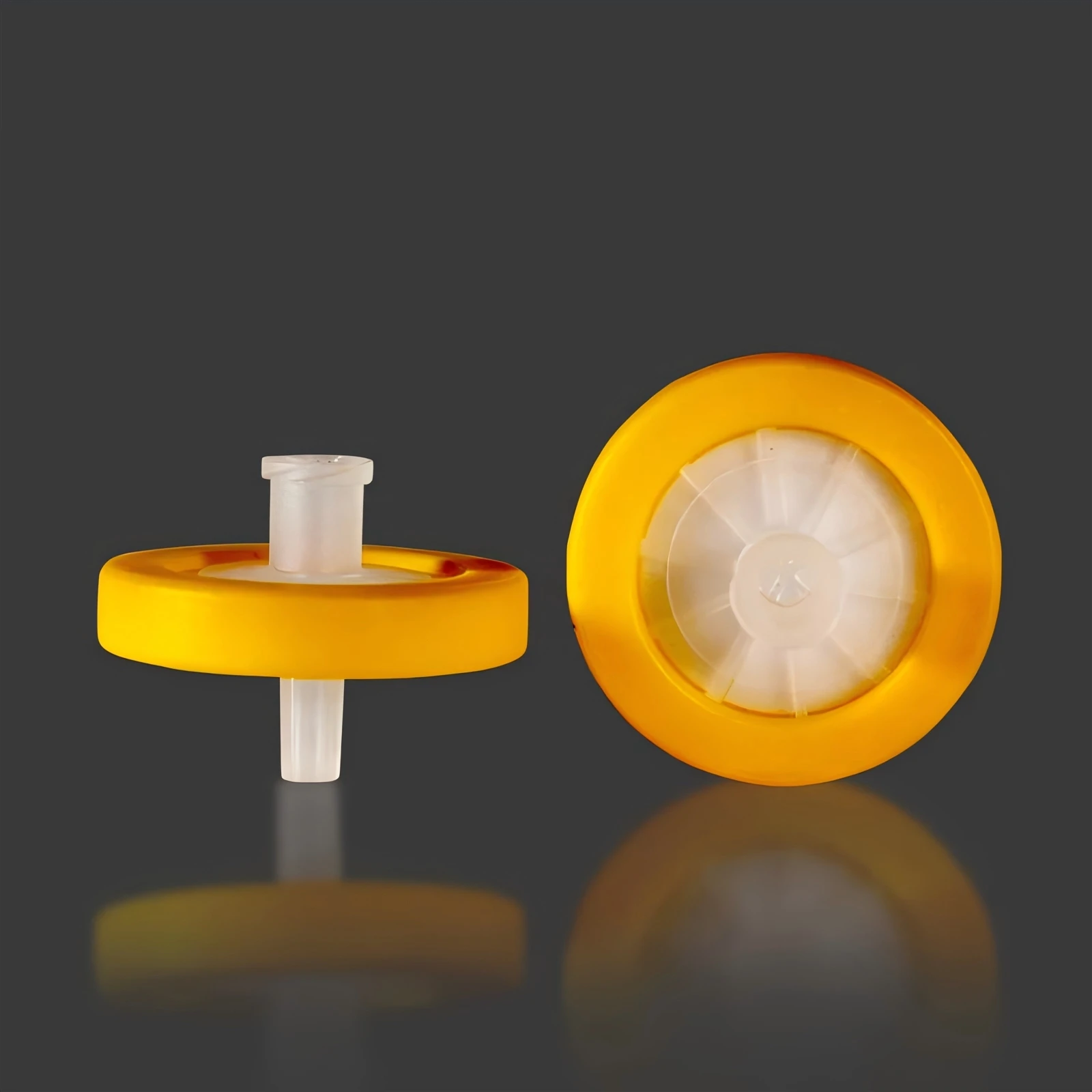
Sterile Syringe Filters with a 0.22 µm pore size are composed of a membrane filter housed within a plastic body, typically made from high-quality polypropylene or polycarbonate. The membrane itself is most commonly made from materials such as Polyethersulfone (PES), Polyvinylidene Fluoride (PVDF), or Nylon, each offering distinct advantages depending on the application. For instance, PES membranes are known for their low protein-binding properties, making them ideal for biological applications, while PVDF offers excellent chemical compatibility and low extractables, which is crucial in chemical and pharmaceutical processes.
The membrane's pore size of 0.22 µm is specifically chosen for its ability to filter out bacteria, such as E. coli and Pseudomonas aeruginosa, and other small particles, ensuring the sterility of the filtered solution. The filter housing is typically color-coded or labeled to indicate the type of membrane material and pore size, aiding in easy identification and ensuring the correct filter is used for the intended application.
Sterility and Filtration Efficiency
One of the key features of these syringe filters is their sterility, which is usually achieved through gamma irradiation or ethylene oxide (EtO) sterilization. The sterile packaging ensures that the filters are ready for immediate use in sterile environments, reducing the risk of contamination and saving valuable time in critical applications. The filters are often individually packaged in blister packs or other sterile containers to maintain their sterility until the point of use.
The 0.22 µm pore size provides an optimal balance between flow rate and filtration efficiency. It allows for the efficient filtration of solutions without compromising on the speed of filtration, which is particularly important in high-throughput environments. The high filtration efficiency of these filters ensures that even the smallest microorganisms and particulates are removed, making them suitable for applications where the utmost purity is required.
Applications and Uses
Sterile Syringe Filters with a 0.22 µm pore size are widely used in a variety of applications across different industries. In the pharmaceutical industry, they are essential for the sterilization of drugs, vaccines, and other injectable solutions, where the presence of any bacterial contamination could have serious consequences. In biotechnology, these filters are used to sterilize cell culture media, which is critical for maintaining the integrity of cell cultures and ensuring reproducible results in experiments.
In microbiology, 0.22 µm syringe filters are used for the sterilization of buffers and reagents, as well as for the preparation of samples for analysis. They are also used in the filtration of air and gases, where the removal of bacteria and particulates is necessary to maintain a sterile environment. Additionally, these filters are employed in chemical analysis, particularly in HPLC (High-Performance Liquid Chromatography), where the removal of particulates from solvents and samples is essential to prevent damage to the chromatographic column and ensure accurate results.
Advantages and Features
Sterile Syringe Filters with a 0.22 µm pore size offer several advantages that make them a preferred choice in many applications. Their compact design allows for easy integration into various laboratory workflows, and their compatibility with a wide range of solvents and solutions ensures versatility. The low hold-up volume of these filters minimizes sample loss, which is particularly important when working with expensive or limited-quantity samples.
Furthermore, the ease of use of syringe filters, which simply attach to the end of a syringe, allows for quick and efficient filtration without the need for complex equipment. The filters are designed to withstand high pressures, ensuring reliable performance even with viscous solutions. Many sterile syringe filters also feature a low extractables design, meaning that the risk of introducing unwanted substances into the filtered solution is minimized.
Customization and Packaging
Sterile Syringe Filters with a 0.22 µm pore size are available in various configurations, including different membrane materials, diameters, and packaging options. This allows users to select the most appropriate filter for their specific application. Custom packaging options are also available for bulk purchases, catering to the needs of large laboratories or industrial settings. The filters are often packaged in boxes containing multiple units, with each filter individually wrapped to maintain sterility.
Applications
Pharmaceutical and Biotechnology: They are crucial for sterile filtration of solutions, ensuring that products are free from microbial contamination.
Food and Beverage: PES filters are used to ensure the clarity and safety of beverages and food products, removing particles and microorganisms.
Chemical Processing: They are employed to filter chemicals and solvents in various processes, protecting equipment and ensuring product purity.
Laboratories: In research settings, PES filters are used to sterilize media, reagents, and solutions, supporting accurate and reliable experimental results.
Medical Devices: They are used in the manufacture of medical devices and diagnostic equipment, where sterility and high performance are critical.
one-stop
solution
professional
team
high
quality
FAQ:
1. What are the key materials used in the construction of Sterile Syringe Filters with a 0.22 µm pore size?
Sterile Syringe Filters with a 0.22 µm pore size are typically made from high-quality materials such as polypropylene or polycarbonate for the housing, and Polyethersulfone (PES), Polyvinylidene Fluoride (PVDF), or Nylon for the membrane. Each material offers specific advantages, such as PES for low protein binding in biological applications and PVDF for excellent chemical compatibility and low extractables in chemical and pharmaceutical processes.
2. How do Sterile Syringe Filters with a 0.22 µm pore size ensure sterility in the filtration process?
These filters ensure sterility through their 0.22 µm membrane, which effectively filters out bacteria like E. coli and Pseudomonas aeruginosa. Additionally, they are sterilized through methods like gamma irradiation or ethylene oxide (EtO) sterilization, and are packaged in sterile conditions to prevent contamination before use, making them ideal for critical applications in pharmaceuticals, biotechnology, and microbiology.
3. What makes the 0.22 µm pore size ideal for Sterile Syringe Filters?
The 0.22 µm pore size strikes an optimal balance between filtration efficiency and flow rate. It is fine enough to remove small particles and bacteria, ensuring the sterility of the solution, while still allowing for a practical flow rate that is particularly important in high-throughput laboratory environments.
4. In which industries are Sterile Syringe Filters with a 0.22 µm pore size commonly used?
These filters are widely used in the pharmaceutical industry for sterilizing drugs, vaccines, and injectable solutions. They are also essential in biotechnology for sterilizing cell culture media, in microbiology for preparing samples, and in chemical analysis, particularly in HPLC, to prevent particulate damage to chromatographic columns and ensure accurate results.
5. What are the advantages of using Sterile Syringe Filters with a 0.22 µm pore size in laboratory workflows?
These filters offer several advantages, including their compact design for easy integration into workflows, compatibility with a wide range of solvents, and low hold-up volume to minimize sample loss. Their ability to attach easily to syringes allows for quick and efficient filtration without the need for complex equipment, making them highly practical for various applications.
6. How are Sterile Syringe Filters with a 0.22 µm pore size packaged to maintain sterility?
Sterile Syringe Filters are typically packaged individually in sterile blister packs or other containers to maintain sterility until use. They are often available in bulk packaging for large laboratories or industrial settings, with each filter individually wrapped to prevent contamination, ensuring they are ready for immediate use in sterile environments.
7. Can Sterile Syringe Filters with a 0.22 µm pore size be customized for specific applications?
Yes, these filters are available in various configurations, including different membrane materials, diameters, and packaging options. Custom packaging is also available, allowing users to select the most appropriate filter for their specific application, whether in pharmaceutical production, biotechnology research, or chemical analysis.
Hot Tags: sterile syringe filters 0.22 um, China sterile syringe filters 0.22 um manufacturers, suppliers, factory