


Material Composition and Construction
PTFE is a synthetic fluoropolymer known for its exceptional chemical resistance, hydrophobic properties, and thermal stability. These characteristics make PTFE an excellent choice for applications requiring the filtration of harsh chemicals, strong acids, bases, solvents, and other aggressive substances. The PTFE membrane is inherently hydrophobic, which makes it particularly suitable for filtering non-aqueous solutions or for use in venting applications where moisture must be repelled.
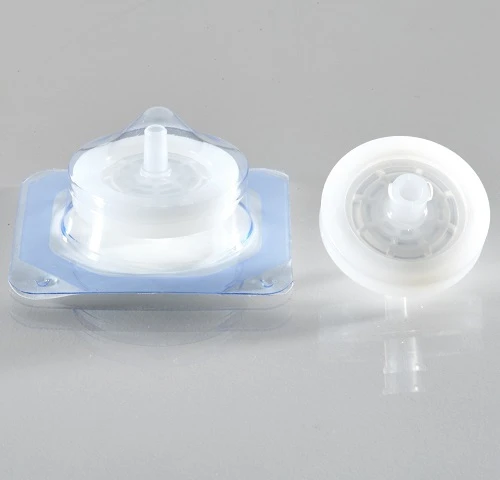
The PTFE membrane is housed within a sturdy polypropylene (PP) or acrylic shell, depending on the manufacturer's design. This robust casing ensures the filter's durability during use, preventing any leakage or damage under pressure. The design also often includes luer lock or luer slip connections, which ensure a secure and leak-proof fit with standard syringe nozzles or other compatible equipment.
Key Features and Advantages
Chemical Resistance: The PTFE membrane's resistance to a wide range of chemicals, including organic solvents, acids, and bases, makes it an ideal choice for complex filtration tasks in chemical and pharmaceutical laboratories. Unlike other filter materials that may degrade or react with certain chemicals, PTFE maintains its integrity, providing consistent and reliable filtration.
Broad Compatibility: The PTFE Syringe Filter is compatible with a variety of sample types, including those containing aggressive solvents or other reactive substances. This broad compatibility reduces the need for multiple types of filters, simplifying the filtration process in multi-step procedures.
High Flow Rate: The 0.45 μm pore size allows for a high flow rate while still effectively removing particulates. This feature is particularly beneficial in high-throughput settings where time efficiency is critical, as it enables faster sample preparation without compromising on filtration quality.
Thermal Stability: PTFE's ability to withstand high temperatures without degrading ensures that the syringe filter can be used in processes that involve elevated temperatures, further extending its applicability in various industrial and research contexts.
Applications
Pharmaceutical and Biotechnology: They are crucial for sterile filtration of solutions, ensuring that products are free from microbial contamination.
Food and Beverage: PES filters are used to ensure the clarity and safety of beverages and food products, removing particles and microorganisms.
Chemical Processing: They are employed to filter chemicals and solvents in various processes, protecting equipment and ensuring product purity.
Laboratories: In research settings, PES filters are used to sterilize media, reagents, and solutions, supporting accurate and reliable experimental results.
Medical Devices: They are used in the manufacture of medical devices and diagnostic equipment, where sterility and high performance are critical.
one-stop
solution
professional
team
high
quality
FAQ:
What makes PTFE an ideal material for syringe filters in harsh chemical environments?
PTFE's exceptional chemical resistance, hydrophobic properties, and thermal stability make it ideal for syringe filters used in harsh chemical environments. Its ability to resist degradation when exposed to strong acids, bases, and solvents ensures reliable filtration without compromising filter integrity, making it a preferred choice for complex filtration tasks in laboratories and industrial settings.
How does the hydrophobic nature of PTFE benefit filtration applications?
The hydrophobic nature of PTFE makes it particularly suitable for filtering non-aqueous solutions and protecting samples from moisture contamination. This is especially important in applications like gas filtration or sample preparation for gas chromatography, where water ingress could affect the accuracy and reliability of results.
What types of casing materials are typically used in PTFE syringe filters?
PTFE syringe filters are typically housed in casings made from sturdy polypropylene (PP) or acrylic. These materials ensure the durability of the filter during use, preventing leakage or damage under pressure. The choice of casing material often depends on the manufacturer's design and intended application.
What connection types are commonly used with PTFE syringe filters, and why are they important?
PTFE syringe filters commonly feature luer lock or luer slip connections. These connection types are important because they ensure a secure and leak-proof fit with standard syringe nozzles or other compatible equipment. This secure fit is crucial for maintaining the integrity of the filtration process and preventing sample contamination or leakage.
Hot Tags: PTFE Syringe Filter 0.45, China PTFE Syringe Filter 0.45 manufacturers, suppliers, factory