

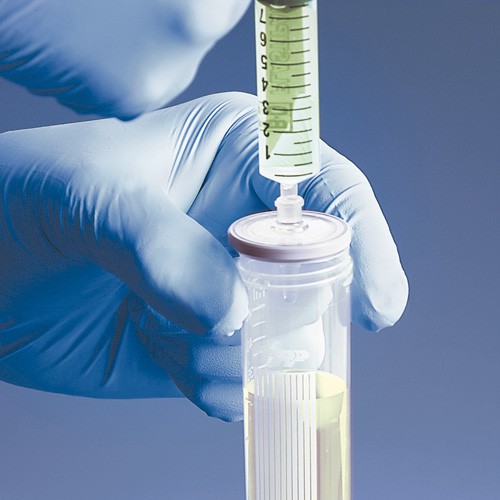
Key Technical Specifications
Sterile syringe filters are engineered for high reproducibility in analytical laboratories:
Membrane pore size: 0.22 μm / 0.45 μm (standard options)
Diameter: 13 mm / 25 mm / 33 mm / 50 mm
Sterilization method: Gamma irradiation (25–50 kGy)
Housing material: Medical-grade polypropylene (PP)
Maximum operating pressure: up to 6 bar (87 psi)
Hold-up volume: < 100 μL (low sample loss design)
Operating temperature: 5°C – 60°C
Filtration area: 0.8 – 13.0 cm² (depending on size)
Sterile syringe filters are available in multiple membrane types for different laboratory applications:
● PES (Polyethersulfone)
High flow rate
Low protein binding
Ideal for aqueous solutions and biological samples
● PVDF (Polyvinylidene Fluoride)
Broad chemical compatibility
Suitable for protein and protein-based solutions
Low extractables
● PTFE (Hydrophobic / Hydrophilic)
Excellent chemical resistance
Ideal for organic solvents and aggressive chemicals
Used in HPLC sample prep and solvent filtration
● Nylon
Strong mechanical strength
Suitable for general aqueous and organic solutions
Applications in Laboratory & Industry
PLC / UHPLC Sample Preparation
Removal of particulate matter before injection
Protection of chromatographic columns
Improved analytical accuracy and reproducibility
Pharmaceutical Laboratory Testing
Sterile filtration of drug formulations
Sample clarification for stability testing
Microbial contamination control
Biotechnology & Life Science Research
Cell culture media filtration
Protein and enzyme solution sterilization
Buffer solution purification
Environmental & Chemical Analysis
Water sample clarification
Solvent filtration
Trace analysis sample prep
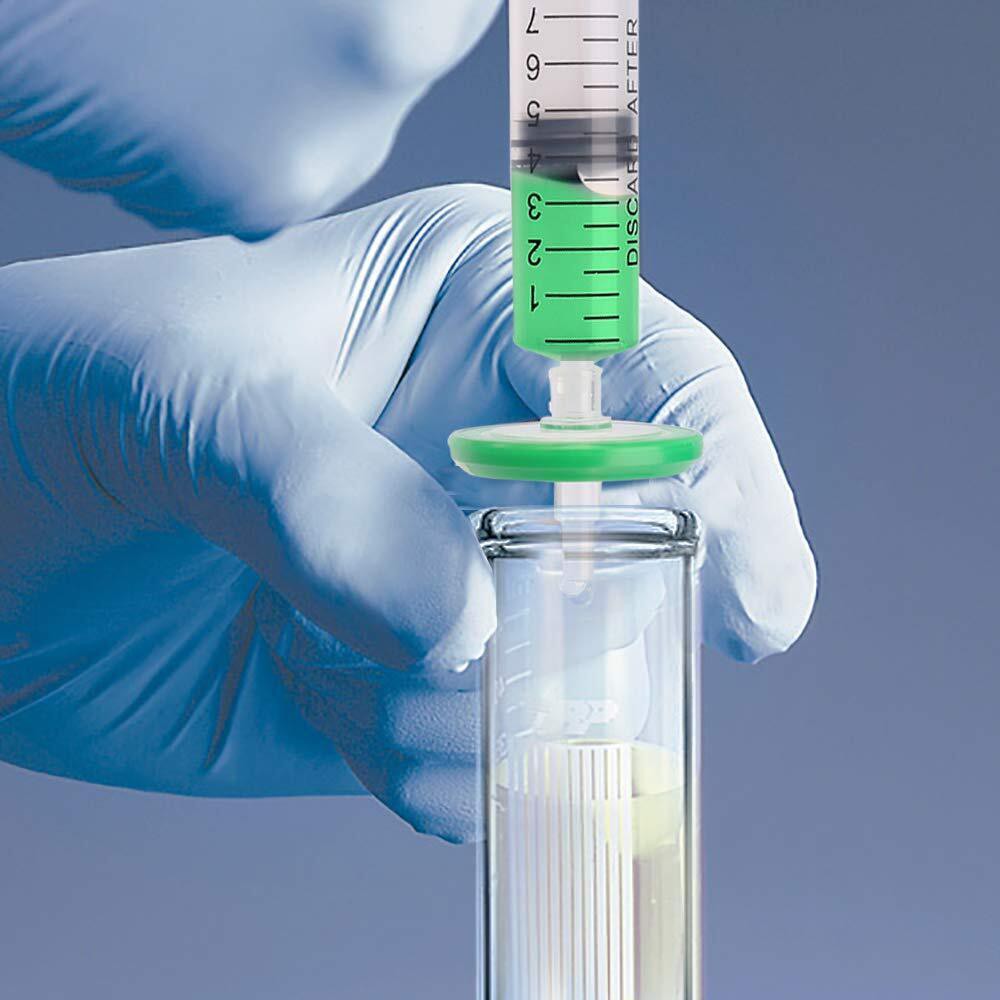
FAQ:
How to choose the correct pore size for sterile syringe filters?
A: Pore size selection depends on the purpose of filtration:
0.22 μm: Sterilization-grade filtration, removes bacteria and fine particles
0.45 μm: General clarification, commonly used for HPLC sample prep
1.0 μm or larger: Pre-filtration for highly particulate samples
For HPLC analysis, 0.22 μm is preferred when high purity is required, while 0.45 μm is widely used for routine analytical work.
Why does syringe filter clog quickly during sample filtration?
Rapid clogging is usually caused by high particulate load or incorrect membrane selection:
Sample not pre-centrifuged or pre-filtered
Using 0.22 μm directly for dirty samples
Membrane incompatibility with sample viscosity
To improve flow, use step filtration (1.0 μm → 0.45 μm → 0.22 μm) or switch to larger diameter filters (25 mm or 33 mm).
Hot Tags: sterile syringe filter for laboratory, China sterile syringe filter for laboratory manufacturers, suppliers, factory