

Industrial water filters are essential equipment in industrial production for purifying water quality, and their service life varies significantly depending on various factors. Let's explore the lifespan of different types of industrial water filters, the key factors affecting their longevity, and how to determine when they need replacement.
Types of Industrial Water Filters and Their Lifespan Characteristics

Bag filters are commonly used in industrial fields. They use filter bags as the filtering medium and are characterized by large processing capacity and high filtration precision, widely applied in liquid filtration in chemical, food and beverage, coating and other industries. The filter bags are easy to replace and can effectively remove particulate impurities in liquids.
The service life of the filter bags of bag filters usually ranges from a few hours to a few weeks. When dealing with industrial wastewater containing a large amount of impurities, the filter bags are prone to clogging and may need to be replaced every few hours. For example, in chemical production, when handling reaction liquids with a large number of suspended particles, the filter bags of bag filters may need to be replaced every 2-3 hours to ensure filtration efficiency. On the other hand, when processing relatively clean process water, the service life of the filter bags can be extended to a few weeks.
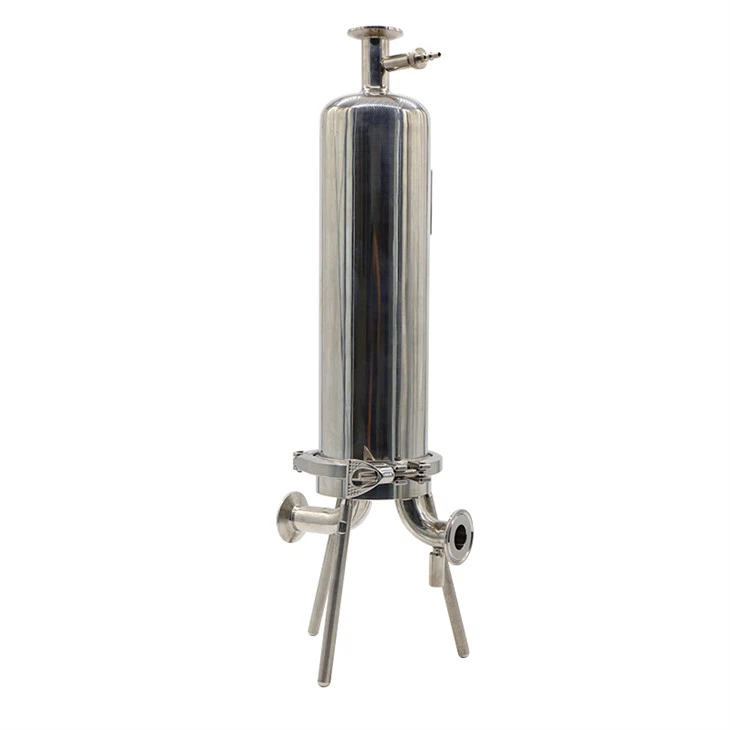
Cartridge filters achieve filtration through filter elements of different materials, with a wide range of filtration precision, which can meet the needs from rough filtration to fine filtration. They are often used in electronics, pharmaceutical and other industries with strict water quality requirements. They have a compact structure, small footprint, and are suitable for industrial environments with limited space.
The service life of the filter elements of cartridge filters is relatively longer, generally 1-6 months. For rough filtration filter elements with low filtration precision requirements, they can be used for about 6 months when dealing with good water quality. However, for fine filtration filter elements that need to intercept smaller impurities, in the case of poor water quality, they may need to be replaced in 1 month. For instance, in the ultra-pure water preparation process in the electronics industry, the fine filtration filter elements used to remove tiny particles usually need to be replaced every 1-2 months.
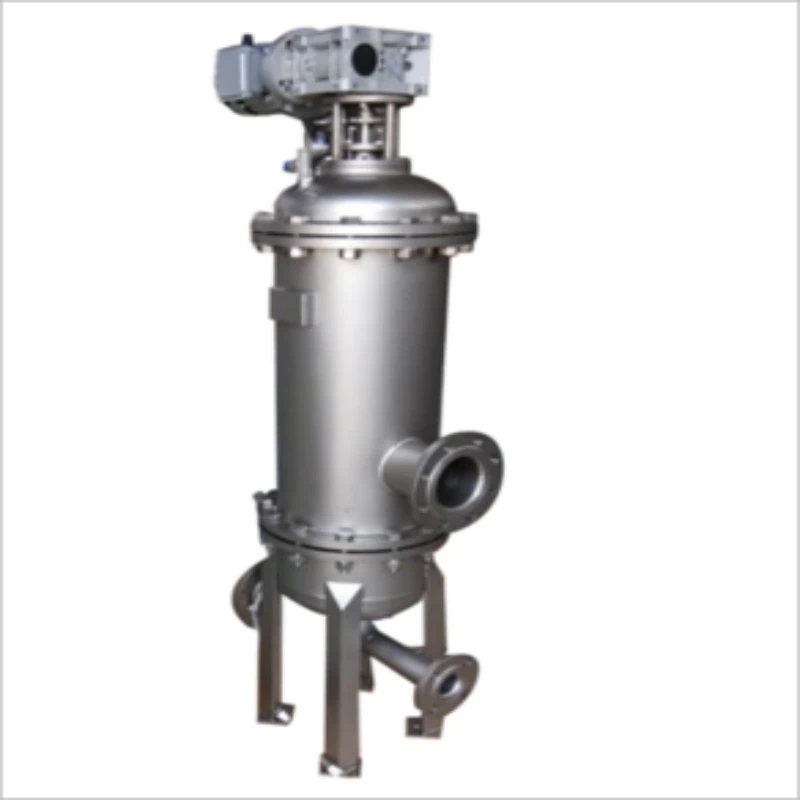
Self-cleaning filters are highly automated equipment that can perform self-cleaning without stopping operation, greatly reducing manual maintenance costs. They are often used in power, steel, municipal sewage treatment and other industries that require continuous water supply. They can automatically start the cleaning process according to water quality conditions to ensure the stability of filtration effect.
The service life of the core components (such as filter screens) of self-cleaning filters is relatively long, generally 1-3 years. But it also depends on water quality and cleaning frequency. If the water contains a high amount of impurities and cleaning is frequent, it will accelerate the wear of the filter screen, and it may need to be replaced in about 1 year. If the water quality is good and the number of cleanings is small, the filter screen can be used for about 3 years. In municipal sewage treatment plants, when self-cleaning filters are used to treat sewage, due to the large amount of impurities, the filter screens usually need to be replaced every 2 years or so.
Key Factors Affecting the Service Life of Industrial Water Filters
- Water Quality Conditions: The water quality of industrial water is complex and variable. The type, concentration and particle size of impurities in the water directly affect the service life of the filter. Water quality containing a large number of hard particles and high concentrations of chemical pollutants will aggravate the wear and blockage of the filter medium, shortening its service life. For example, in the wastewater treatment of the mining industry, the water contains a large amount of sediment and metal particles, so the service life of the filter will be much shorter than that of treating ordinary industrial water.
- Treatment Water Volume: The larger the volume of treated water, the heavier the load on the filter medium, the faster the saturation speed, and the corresponding shortening of the service life. In the circulating water treatment system of large power enterprises, due to the huge amount of treated water, the replacement frequency of filters is much higher than that of small factories.
- Operating Parameters: The operating pressure, temperature and other parameters of the filter will also affect its service life. Excessively high operating pressure will increase the burden on the filter medium, leading to premature damage. Temperatures beyond the specified range will affect the material performance of the filter medium, reducing the filtration effect and service life. For example, in the water supply system of high-temperature and high-pressure chemical reaction kettles, the service life of the filter will be shortened due to harsh operating parameters.
- Maintenance: Regular maintenance is crucial to extend the service life of industrial water filters. Timely cleaning of impurities on the surface of the filter, regular inspection of the operating status of the equipment, and maintenance in accordance with operating procedures can all effectively extend its service life. On the contrary, improper maintenance, such as the accumulation of a large amount of impurities inside the filter that are not cleaned in time, will lead to problems such as equipment corrosion and blockage, greatly shortening its service life.


Methods to Determine When to Replace Industrial Water Filters
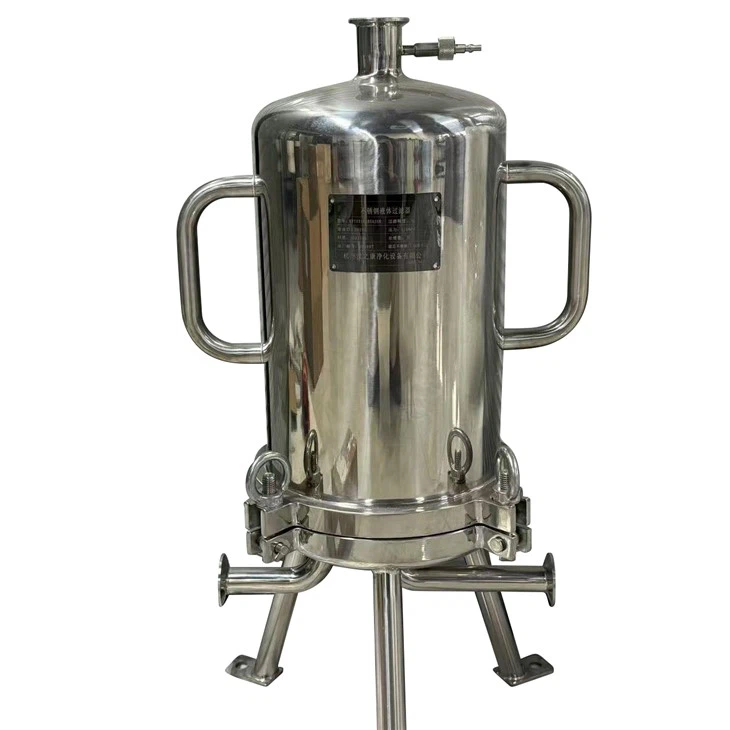
- Decreased Filtration Efficiency: When it is found that the filtered water quality does not meet the production requirements, such as excessive impurity content in the water, it indicates that the filter medium has partially failed and needs to be replaced. In the pharmaceutical industry, if the content of microorganisms or particles in the filtered process water exceeds the standard, it indicates that the filter needs to be replaced.
- Abnormal Operating Pressure: The pressure difference between the inlet and outlet of the filter is an important indicator to judge whether it needs to be replaced. When the pressure difference exceeds the specified range, it indicates that the filter medium is seriously blocked, affecting the water flow, and at this time, the filter medium or related components need to be replaced. For example, during the operation of the cartridge filter, if the pressure difference between the inlet and outlet is higher than the initial value by a certain range (usually 0.1-0.2MPa), the filter element should be replaced.
- Frequent Equipment Failures: If the self-cleaning filter frequently has failures such as incomplete cleaning and inability to start the cleaning process normally, it may be that the core components are severely worn or damaged, and relevant components need to be replaced. In the circulating water system of iron and steel plants, if the self-cleaning filter often has cleaning failures, affecting the continuity of water supply, it is necessary to check and replace the corresponding components.
- Visual Inspection: For detachable filters, regularly conduct a visual inspection of the filter medium. If the filter bag is damaged, the filter element is deformed, or the filter screen has holes, it should be replaced immediately. In food and beverage production, when inspecting the filter bags of bag filters, if the filter bags are found to be damaged, they must be replaced immediately to prevent impurities from entering the products.
In conclusion, the service life of industrial water filters varies greatly due to factors such as type and working conditions. Understanding their service life, influencing factors, and mastering the methods to determine the replacement time are of great significance for ensuring the normal operation of industrial production and reducing production costs. Enterprises should formulate reasonable maintenance and replacement plans according to their own production processes and water quality conditions to ensure the efficient and stable operation of the filtration system.