


Liquid filter bag housings operate based on a simple yet effective principle of filtration. These housings are designed to hold filter bags securely in place while allowing liquid to pass through the bags for filtration. The process begins with the installation of a filter bag inside the housing, typically made of materials like nylon or polyester, which are capable of trapping particles of various sizes.
When liquid enters the housing through the inlet port, it flows through the filter bag. As the liquid passes through the porous material of the filter bag, contaminants and impurities are captured, while the clean liquid continues to flow through the bag's openings. The size of the particles captured depends on the pore size of the filter bag, which can vary depending on the specific filtration requirements.
As the filtration process continues, the filtered liquid exits the housing through the outlet port, leaving behind the trapped contaminants inside the filter bag. The effectiveness of the filtration depends on factors such as the material and pore size of the filter bag, the flow rate of the liquid, and the nature of the contaminants being removed.
Once the filtration process is complete or when the filter bag reaches its maximum capacity, the housing can be opened, and the used filter bag can be removed and replaced with a new one. This allows for easy maintenance and ensures continued filtration efficiency.
Overall, liquid filter bag housings provide a reliable and efficient method for removing contaminants and impurities from liquids in various industrial applications, including water treatment, chemical processing, food and beverage production, and pharmaceutical manufacturing.

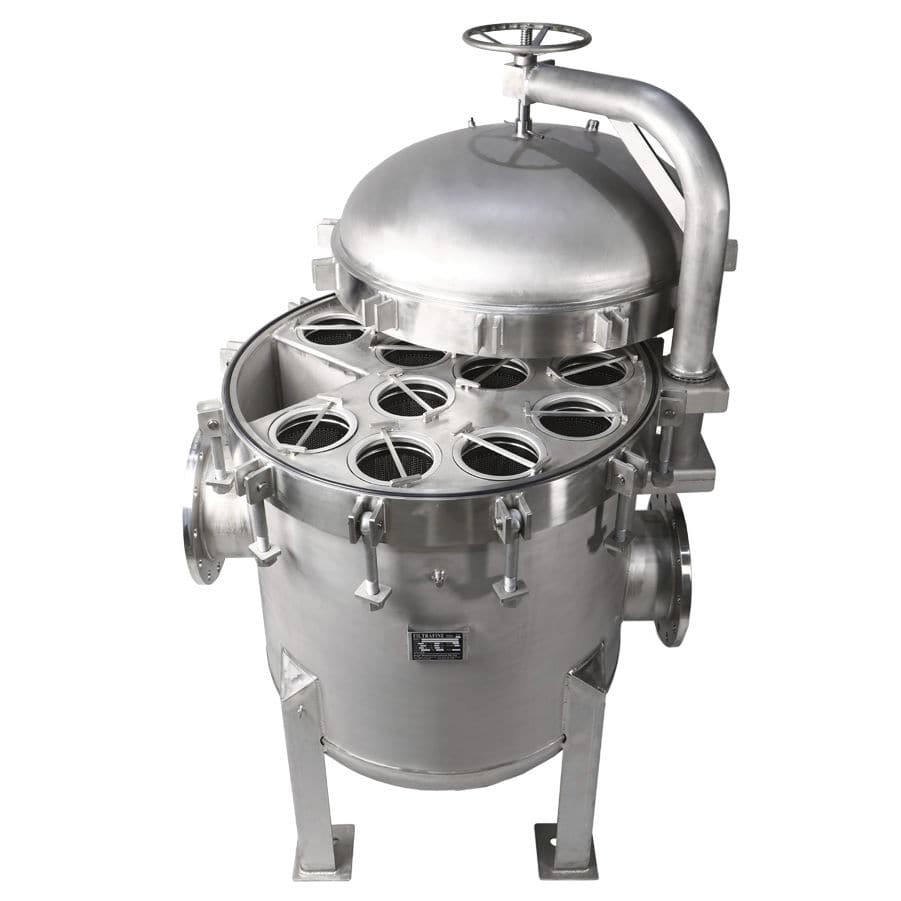
| Technical Parameters | |
| Design pressure: | 0.96MPa 30min |
| Maximum working pressure: | 0.60MPa |
| Surface finish: | Ra≤0.2 |
| Design flow rate: | Ra≤0.2 |
| Interface form: | thread or flange |
| Type: | single bag or multi-bag filter |

Advantages of Filter Bag Housings
Liquid filter bag housings offer several advantages in industrial filtration processes. Firstly, they provide efficient removal of contaminants and impurities from liquids, ensuring product quality and process integrity. Secondly, these housings are versatile and can accommodate a wide range of filter bag sizes and materials, allowing for flexibility in filtration applications. Thirdly, they are easy to install, operate, and maintain, reducing downtime and operational costs. Additionally, liquid filter bag housings are robustly constructed from durable materials like stainless steel or polypropylene, ensuring long-term reliability and performance in demanding industrial environments. Overall, these housings provide a cost-effective and efficient solution for liquid filtration needs across various industries.
one-stop solution
professional team
high quality
FAQ:
1: How do filter bag housings operate in industrial filtration processes?
They operate by securely holding filter bags in place while allowing liquid to pass through for filtration. The process begins with the installation of a filter bag made of materials like nylon or polyester inside the housing. When liquid enters through the inlet port, it flows through the filter bag. Contaminants are captured by the porous material of the filter bag while the clean liquid continues through the bag's openings.
2: What factors influence the effectiveness of filtration in them?
Several factors influence filtration effectiveness, including the material and pore size of the filter bag, the flow rate of the liquid, and the nature of contaminants. The pore size determines the size of particles captured, while the flow rate affects the filtration efficiency. Contaminants are trapped inside the filter bag, allowing clean liquid to exit through the outlet port.
3: How are liquid filter bag housings maintained for continued filtration efficiency?
Once the filtration process is complete or when the filter bag reaches its capacity, the housing can be opened, and the used filter bag replaced with a new one. This simple maintenance procedure ensures continued filtration efficiency. Additionally, regular inspections and cleaning of the housing components can help prevent clogging and ensure optimal performance.
4: What are the advantages of using them in industrial applications?
They offer several advantages, including efficient removal of contaminants and impurities, versatility in accommodating different filter bag sizes and materials, ease of installation, operation, and maintenance, and robust construction for long-term reliability. These advantages make them suitable for various industrial applications such as water treatment, chemical processing, food and beverage production, and pharmaceutical manufacturing.
5: How do liquid filter bag housings contribute to process integrity in industrial settings?
They provide a reliable and efficient method for removing contaminants and impurities from liquids, ensuring product quality and process integrity. By maintaining clean and purified liquids, these housings help prevent equipment damage, reduce downtime, and ensure consistent product quality, making them indispensable in various industrial applications.
Hot Tags: liquid filter bag housings, China liquid filter bag housings manufacturers, suppliers, factory, compact bag filter housing, bag filter housing, filter housing for bags, high flow bag filter housing, plastic bag filter housing, heavy duty bag filter housing