


Products Description
The core of a white string wound filter consists of a perforated tube or solid rod, typically made from materials like stainless steel or polypropylene, chosen based on the application's specific needs, such as chemical compatibility or temperature resistance. Around this core, a continuous string is tightly wound in a crisscross pattern. The string is often made from high-quality polypropylene, cotton, or other synthetic fibers, providing durability and resistance to chemical or physical degradation.
Filtration Principle
The unique design of the string winding creates a depth filtration effect. As the liquid passes through the filter, larger particles are trapped on the outer layers, while smaller particles are caught deeper within the wound structure. This progressive filtration helps extend the filter's lifespan by distributing the contaminant load evenly across its layers.
The white string wound filter typically provides filtration in various micron ratings, ranging from coarse filtration at around 100 microns to fine filtration down to 1 micron. This versatility makes it ideal for a wide range of applications where different levels of filtration are required.
Products parameters
| Technical parameters: (can be customized according to needs): | ||||
| Filter material: polypropylene yarn, absorbent cotton thread, glass fiber | ||||
| Center rod material: polypropylene, 304 stainless steel, 316 stainless steel | ||||
| Filter outer diameter: 60mm, 36mm, 115mm | ||||
| Filter element inner diameter: 28mm, 30mm | ||||
| Filter length: 5", 9.75", 10", 20", 30" etc. | ||||
| Filtration precision: 1um, 3um, 5um, 10um, 30um, etc. |
Product Picture


Our factory

Workshop
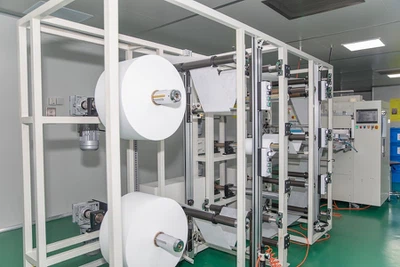
Product Line

Product Line

Workshop
FAQ:
1.What materials are commonly used for the core of a white string wound filter?
The core of a white string wound filter is typically made from materials such as stainless steel or polypropylene, chosen for their chemical compatibility and resistance to temperature extremes, ensuring durability in various industrial applications.
2.How does the string winding pattern affect the filtration process?
The crisscross string winding creates a depth filtration effect, where larger particles are captured on the outer layers and smaller particles are trapped deeper within the filter, enhancing its dirt-holding capacity and prolonging its service life.
3.What types of fibers are used in the string winding, and why?
Commonly, high-quality polypropylene, cotton, or other synthetic fibers are used in the string winding process. These materials are selected for their durability, chemical resistance, and ability to withstand physical degradation, making them suitable for various filtration environments.
4.How does the white string wound filter ensure efficient filtration for different applications?
White string wound filters come with customizable micron ratings, ranging from 1 to 100 microns, allowing for coarse or fine filtration. This flexibility ensures that the filter can be tailored for specific applications, from water purification to chemical processing.
5.What are the advantages of depth filtration in a string wound filter?
Depth filtration provides a high dirt-holding capacity, distributing contaminants across multiple layers. This design allows for longer filtration cycles, reduces maintenance, and extends the filter's lifespan compared to surface filters.
6.In which industries are white string wound filters commonly used, and why?
White string wound filters are widely used in industries such as water treatment, food and beverage, pharmaceuticals, and chemical processing. Their ability to handle various particle sizes, chemical resistance, and efficient filtration make them versatile for applications requiring clean and contaminant-free liquids.
Hot Tags: white string wound filter, China white string wound filter manufacturers, suppliers, factory, Wound Type Filter Cartridge, Cotton Wound Filter Cartridge, PP Wound Filter Cartridge, Pp String Wound Filter Cartridge, Wound Cartridge, Wound Filter Cartridge