

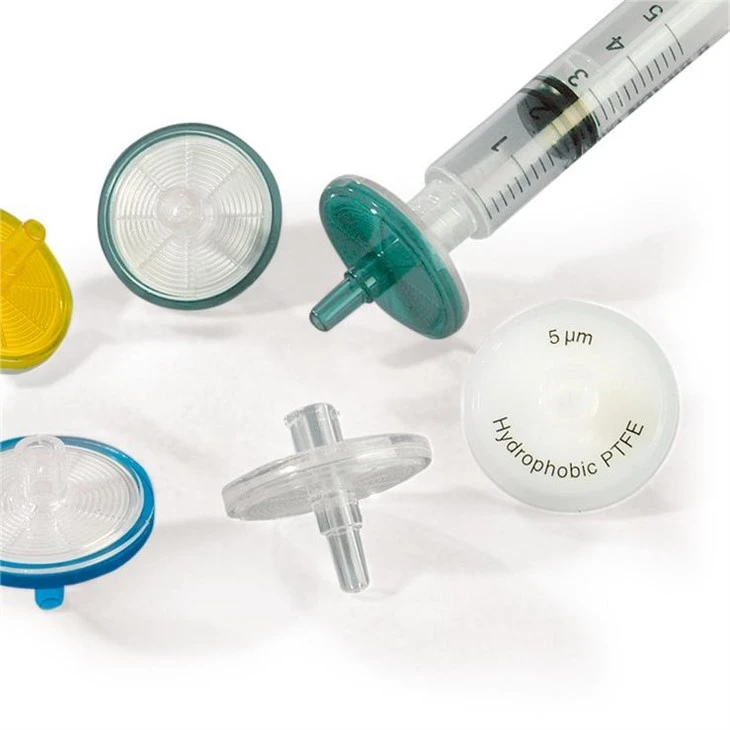
1. High-Efficiency Filtration: The 0.22 μm pore size of the sterile filter is specifically engineered to capture bacteria and other microorganisms with high efficiency. This level of filtration is crucial for applications that require absolute sterility, as it ensures that contaminants are effectively removed from the process stream. The filter's consistent pore size distribution provides reliable performance, minimizing the risk of microbial penetration.
2. Sterilization Assurance: Sterile filters are typically pre-sterilized using methods such as gamma irradiation or ethylene oxide (EtO) to ensure that they are free of any viable microorganisms before use. This pre-sterilization step is essential for applications where the introduction of contaminants must be avoided at all costs, such as in the production of sterile pharmaceuticals, vaccines, and other injectable products.
3. Low Extractables and Leachables: The materials used in the construction of sterile filters, such as polyethersulfone (PES) or polyvinylidene fluoride (PVDF), are chosen for their low extractable and leachable profiles. This ensures that the filter does not introduce unwanted substances into the filtered product, which is critical for maintaining the purity and safety of the final product, especially in sensitive applications like drug formulation.
Sterile vs. Non-Sterile Filters
Sterile Filters: Sterile filters, as the name implies, are pre-sterilized and designed for applications where maintaining sterility is critical. These filters are used in environments where even minimal contamination could compromise product quality or safety. For example, in pharmaceutical manufacturing, sterile filters are essential for ensuring that injectable drugs are free of microorganisms, thereby preventing infections or other adverse effects in patients.
Non-Sterile Filters: Non-sterile filters, on the other hand, are not pre-sterilized and are generally used in applications where sterility is not a primary concern. These filters are often employed in general laboratory use, where the primary goal is to remove particulates rather than ensure sterility. Non-sterile filters can also be sterilized by the user if needed, but this adds an extra step to the process.

Pharmaceutical Industry
Pharmaceutical Industry
In drug formulation, the filter is used to remove particulates and impurities from active pharmaceutical ingredients and excipients. This helps to ensure the quality and safety of the final product.
In sterile filtration, it is used to sterilize solutions by removing bacteria and other microorganisms. This is a critical step in the production of injectable drugs and other sterile products.
one-stop
solution
professional
team
high
quality
FAQ:
1. Why is the 0.22 μm pore size crucial for sterile filtration applications?
The 0.22 μm pore size is critical for sterile filtration because it is specifically engineered to capture bacteria and other microorganisms effectively. This level of filtration ensures that contaminants are removed from the process stream, making it ideal for applications that require absolute sterility, such as in pharmaceutical manufacturing and the production of sterile injectables.
2. What methods are used to pre-sterilize sterile filters, and why is this important?
Sterile filters are typically pre-sterilized using gamma irradiation or ethylene oxide (EtO). This pre-sterilization is essential because it ensures that the filters are free of viable microorganisms before use, preventing contamination in critical applications like the production of sterile pharmaceuticals, vaccines, and other sensitive products.
3. What makes the materials used in sterile filters suitable for sensitive applications like drug formulation?
The materials used in sterile filters, such as polyethersulfone (PES) or polyvinylidene fluoride (PVDF), are chosen for their low extractable and leachable profiles. These materials ensure that the filter does not introduce unwanted substances into the filtered product, which is crucial for maintaining the purity and safety of sensitive applications like drug formulation.
4. What are the main differences between sterile and non-sterile filters, and how does their application differ?
Sterile filters are pre-sterilized and designed for applications where maintaining sterility is critical, such as in pharmaceutical manufacturing, where contamination could compromise product safety. Non-sterile filters are not pre-sterilized and are generally used in applications where sterility is not a primary concern, such as in general laboratory use. Non-sterile filters can be sterilized by the user if needed.
5. In what industries are sterile filters with a 0.22 μm pore size most commonly used, and why?
Sterile filters with a 0.22 μm pore size are most commonly used in the pharmaceutical, biotechnology, and food and beverage industries. They are essential in these industries because they ensure that products like injectable drugs, vaccines, cell culture media, and beverages are free of microorganisms, thereby maintaining product safety and quality.
Hot Tags: sterile filter 0.22 um, China sterile filter 0.22 um manufacturers, suppliers, factory