

Industrial filters are non-negotiable components in manufacturing, protecting equipment, boosting product purity, and ensuring safe operations. The wrong filter can cause costly downtime, equipment wear, or subpar output-so selecting the right one is critical. Below is a step-by-step guide to industrial filter selection that aligns with your process needs, budget, and compliance standards.
Define Your Operating Conditions First
Before comparing filter types, clarify the core industrial filter working conditions that will shape your choice:
Upstream & Downstream Process Requirements
Your filter's filtration precision depends on the downstream equipment or product specs. For example:
Protecting pumps/valves: Choose a 50–100μm industrial filter to block large debris.
High-purity applications (e.g., pharmaceuticals): Opt for 1–10μm precision filters to remove micro-impurities.
Fluid/Media Characteristics
Analyze the material you're filtering:
Viscosity: High-viscosity fluids (resins, greases) require low-resistance filter media (e.g., sintered metal) to avoid flow bottlenecks.
Corrosivity: For acids/alkalis, use 316L stainless steel or PTFE industrial filters (chemical-resistant).
Contaminant type: Hard particles (metal shavings) need wear-resistant filter elements (e.g., metal mesh); sticky residues work with self-cleaning industrial filters.
Environmental & Operational Limits
Temperature: High-temperature processes (200–400°C) call for glass fiber or alloy filters (avoid plastic media, which degrades).
Pressure range: Calculate the maximum working pressure using the formula:

Connection Compatibility
Ensure the filter's inlet/outlet size matches your pipeline (e.g., DN50 or ANSI 2" flanges) to avoid leaks or flow restrictions.
Choose the Right Filter Specifications
With conditions defined, select key industrial filter parameters:
Inlet/Outlet Diameter
Match the filter's diameter to the downstream equipment's inlet size (e.g., a pump with a 2" inlet needs a 2" industrial filter).
Nominal Pressure Rating
Size the filter for the maximum process pressure (not just average). For most cases, use the same pressure class as the equipment it protects (e.g., a 10MPa pump pairs with a 10MPa industrial filter).
Filtration Area Calculation
The filter surface area directly impacts flow rate and lifespan. Follow these steps:
- Confirm filtration precision and select filter media (e.g., 20μm polypropylene).
- Test flow vs. pressure drop (use ISO 16889 multi-pass test data for accuracy).
- Calculate flow velocity (\(\text{m³/(m²·h)}\)) = Flow rate ÷ test media area.
- Final area = Actual flow rate ÷ velocity.
Pro tip: Larger areas reduce clogging-ideal for high-contaminant industrial filters.
Pick the Right Filter Type for Your Process
Industrial filters come in styles tailored to specific needs:
| Filter Type | Best For | Key Benefits |
|---|---|---|
| Bag Filters | Low-viscosity liquids (≤50μm precision) | Low cost, easy filter bag replacement |
| Cartridge Filters | High-precision applications (1–50μm) | Compact, high dirt-holding capacity |
| Self-Cleaning Filters | High-contaminant fluids | Continuous operation, minimal maintenance |
| Sintered Metal Filters | Corrosive/high-temperature media | Durable, reusable, chemical-resistant |
For example:
- Chemical processing: Use PTFE cartridge industrial filters (corrosion-resistant, 0.1–50μm precision).
- Food & beverage: Choose FDA-approved bag filters (20μm) for easy sanitization.
Select Filter Media & Housing Material
The filter media and housing material determine durability and performance:
Filter Media Options
- Polypropylene (PP): Budget-friendly, ideal for weak acids (1–100μm precision).
- PTFE: Extreme corrosion/temperature resistance (≤260°C, 0.1–50μm).
- Stainless Steel Mesh: Reusable, wear-resistant (50–1000μm, for heavy debris).
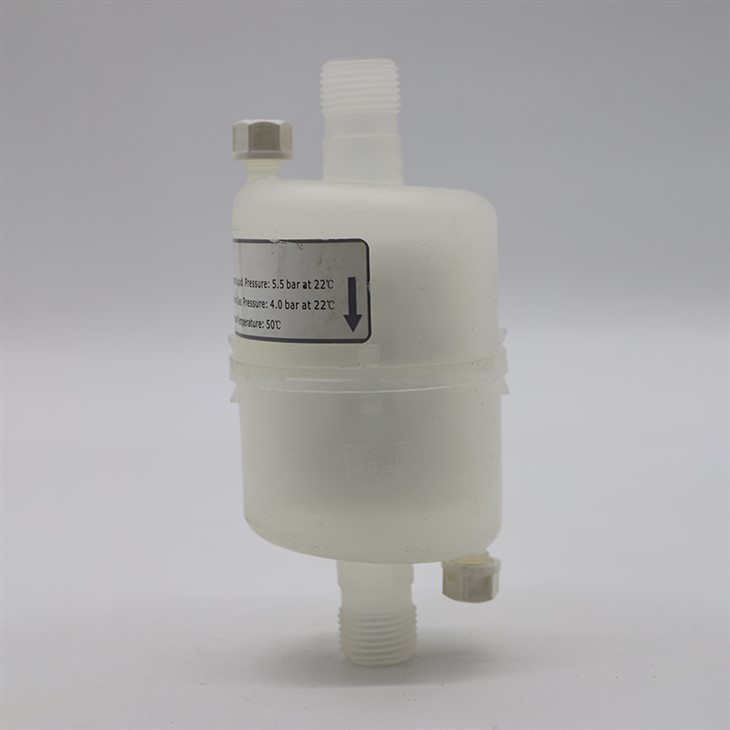
- PFA (perfluoroalkoxy resin): Resistant to ultra-high temperature (≤260℃) and strong corrosion (compatible with strong acids/strong alkalis/organic solvents), with a precision range of 0.05-1μm, suitable for high-purity and harsh chemical process scenarios.



Housing Materials
Match the housing to your media and environment:
- Carbon Steel: Cost-effective for non-corrosive, ambient-temperature processes.
- 316L Stainless Steel: Best for corrosive industrial filters (chemical/pharmaceutical use).
- Alloy: For high-temperature (≥400°C) applications (e.g., metal smelting).
- PFA lined housing: suitable for extremely harsh chemical media (such as high concentrations of acids/alkalis) scenarios.
Validate Performance & Cost Efficiency
Don't overlook total lifecycle cost (not just upfront price):
Maintenance: Self-cleaning industrial filters reduce labor costs vs. disposable bag filters.
Compliance: Ensure filters meet standards like ISO 16889 (filtration efficiency) or FDA (food/pharma use).
Testing: Request multi-pass test reports (per ISO 4572/16889) to verify precision claims.
Final Checklist for Industrial Filter Selection
Confirm filtration precision matches downstream needs.
Verify pressure/temperature ratings align with process limits.
Compare dirt-holding capacity (larger = less frequent changes).
Calculate pressure drop (aim for ≤0.2MPa to avoid energy waste).
Choosing the right industrial filter balances efficiency, cost, and reliability. For custom needs (e.g., high-pressure industrial filters or ultra-precision filters), partner with a supplier that offers sample testing for your specific media.