

Hey there! As a supplier of depth filter cartridges, I've been in this industry for quite some time. I've seen firsthand how crucial it is to understand the quality standards for these cartridges. In this blog, I'll share with you what those standards are and why they matter.
What Are Depth Filter Cartridges?
First off, let's quickly go over what depth filter cartridges are. They're used in a variety of applications, from water treatment to industrial processes. These cartridges work by trapping particles within their porous structure as the fluid passes through. Unlike surface filters that only capture particles on the surface, depth filters can hold a significant amount of contaminants throughout their depth, which gives them a longer service life.
Key Quality Standards
Particle Retention Efficiency
One of the most important quality standards for depth filter cartridges is particle retention efficiency. This refers to the cartridge's ability to remove particles of a specific size from the fluid. For example, a cartridge might be rated to remove 95% of particles that are 5 microns or larger. This rating is usually determined through rigorous testing in a lab.
When you're looking for a depth filter cartridge, make sure to check the particle retention efficiency. If you're dealing with a process that requires very fine filtration, you'll want a cartridge with a high efficiency rating for small particle sizes. For instance, in a pharmaceutical manufacturing process, you might need a cartridge that can remove particles as small as 0.1 microns to ensure the purity of the product.
You can find a great option for a cartridge with good particle retention efficiency in our 5 Micron Deep PP Cartridge. It's designed to effectively capture particles of that size, making it suitable for many industrial and water treatment applications.
Flow Rate
Another important standard is the flow rate. The flow rate of a depth filter cartridge indicates how much fluid can pass through it in a given amount of time, usually measured in gallons per minute (GPM) or liters per minute (LPM). A higher flow rate is generally better, as it means you can process more fluid without having to slow down your operations.
However, the flow rate is also affected by the cartridge's particle retention efficiency. If a cartridge is designed to remove very small particles, it might have a lower flow rate because the pores are smaller and it's more difficult for the fluid to pass through. So, you need to find a balance between the two based on your specific needs.
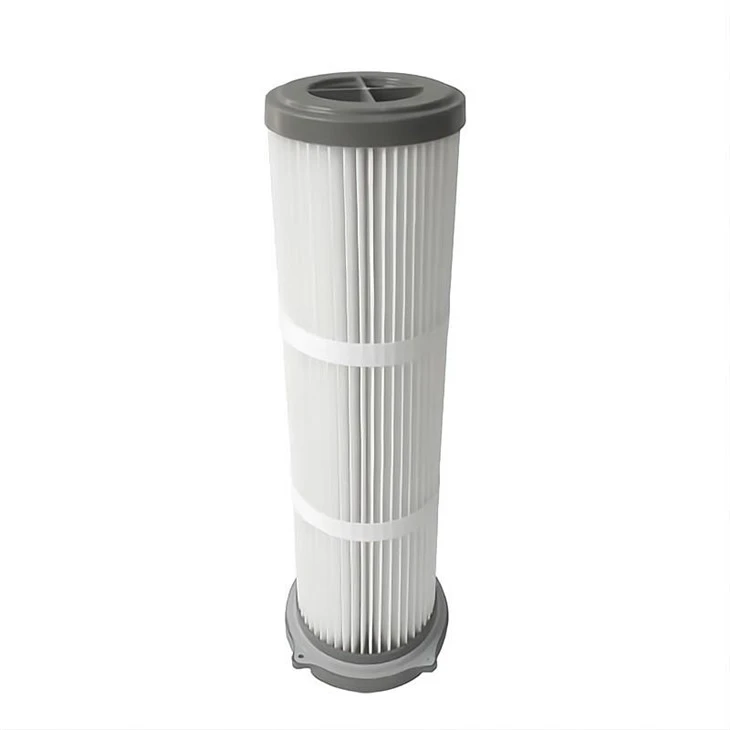
Our Deep Pleate Filter Cartridge is engineered to provide a good balance between flow rate and particle retention. The pleated design increases the surface area, allowing for a higher flow rate while still maintaining effective filtration.
Pressure Drop
Pressure drop is the difference in pressure between the inlet and the outlet of the filter cartridge. As the cartridge traps particles, the pressure drop across it increases. A high pressure drop can be a sign that the cartridge is getting clogged and needs to be replaced.
A good quality depth filter cartridge should have a low initial pressure drop and a slow rate of increase in pressure drop over time. This means that it can operate efficiently for a longer period without causing excessive stress on the system.
Chemical Compatibility
Depth filter cartridges are often used in environments where they come into contact with various chemicals. So, it's essential that the cartridge is chemically compatible with the fluids it will be filtering. If a cartridge isn't compatible with the chemicals, it can break down, release contaminants into the fluid, or lose its filtration effectiveness.
Before choosing a cartridge, you need to know the chemical composition of the fluid you're filtering. Make sure to select a cartridge that is made from materials that can withstand the chemicals without any adverse reactions.

Durability
Durability is also a key quality standard. A durable cartridge can withstand the physical stresses of the filtration process, such as high pressure and temperature. It should also be resistant to wear and tear, so it doesn't need to be replaced too frequently.
We test our cartridges under various conditions to ensure their durability. This way, you can be confident that our cartridges will last in your specific application.
Why Quality Standards Matter
Meeting these quality standards is crucial for several reasons. First of all, it ensures the effectiveness of the filtration process. If a cartridge doesn't meet the particle retention efficiency standard, it won't be able to remove the contaminants from the fluid as it should. This can lead to problems in your process, such as equipment damage or product quality issues.
Secondly, quality standards help to ensure the safety of your operations. For example, if a cartridge isn't chemically compatible with the fluid, it can pose a risk to the environment and the people working with the system.
Finally, using high-quality depth filter cartridges can save you money in the long run. A durable cartridge that has a long service life and low pressure drop means less frequent replacements and lower energy costs.
Applications of Depth Filter Cartridges
Depth filter cartridges are used in a wide range of applications. In water treatment, they're used to remove sediment, rust, and other particles from the water. You can find suitable cartridges for water treatment in our Depth Filter Cartridges For Water Treatment section.
In the food and beverage industry, depth filters are used to clarify liquids, remove impurities, and improve the taste and appearance of the products. In the pharmaceutical industry, they're used to ensure the purity of drugs and other medical products.
Conclusion
In conclusion, understanding the quality standards for depth filter cartridges is essential if you want to ensure the effectiveness and safety of your filtration process. Particle retention efficiency, flow rate, pressure drop, chemical compatibility, and durability are all important factors to consider when choosing a cartridge.
If you're in the market for high-quality depth filter cartridges, we've got you covered. Our cartridges are designed and tested to meet the highest quality standards, so you can trust them to perform well in your application.
If you have any questions or want to discuss your specific filtration needs, don't hesitate to reach out. We're here to help you find the best solution for your business.
References
- ASTM International. (20XX). Standard test methods for evaluating the performance of depth filter cartridges.
- Filtration Industry Association. (20XX). Best practices for selecting and using depth filter cartridges.