

Can a wound filter cartridge remove bacteria?
As a supplier of wound filter cartridges, I often encounter customers who are curious about the capabilities of our products, especially when it comes to the removal of bacteria. In this blog post, I'll delve into the science behind wound filter cartridges and explore whether they can effectively remove bacteria from various substances.
Understanding Wound Filter Cartridges
Wound filter cartridges are a type of depth filter that are commonly used in a wide range of industries, including water treatment, food and beverage, pharmaceuticals, and chemical processing. These cartridges are typically made by winding a continuous strand of material, such as cotton, polyester, or polypropylene, around a central core. The winding process creates a tight, multi - layer structure that traps particles as fluid passes through the cartridge.

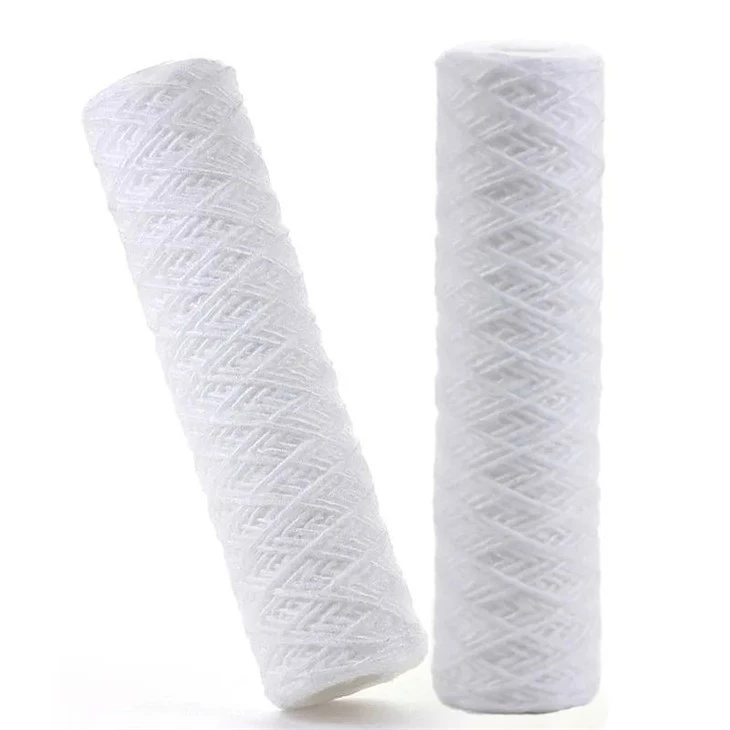
There are different types of wound filter cartridges available on the market. For example, the Cotton String Wound Filter is made from natural cotton fibers. Cotton is known for its high absorbency and ability to trap a variety of particles. The Yarn Wound Filter Cartridge uses yarn as the winding material, which can offer different levels of filtration depending on the type of yarn and the winding density. The String Wound Cotton Depth Filter Cartridge combines the benefits of cotton and a depth - filtration design to provide effective particle removal.
Mechanisms of Filtration
The primary mechanism by which wound filter cartridges work is mechanical filtration. As fluid flows through the cartridge, particles larger than the pore size of the filter media are physically trapped within the winding layers. The depth of the winding structure allows for a large surface area for particle capture, which helps to increase the filter's capacity and efficiency.
In addition to mechanical filtration, some wound filter cartridges may also have some degree of electrostatic attraction. Certain materials used in the winding process can develop an electrostatic charge, which can attract and hold charged particles, including some bacteria. However, the effectiveness of electrostatic attraction in bacteria removal is relatively limited compared to other filtration methods.
Can Wound Filter Cartridges Remove Bacteria?
The ability of a wound filter cartridge to remove bacteria depends on several factors, including the pore size of the filter, the type of bacteria, and the operating conditions.
Pore Size
The pore size of a wound filter cartridge is a critical factor in determining its ability to remove bacteria. Bacteria come in a wide range of sizes, with most common bacteria ranging from 0.2 to 2 micrometers in diameter. To effectively remove bacteria, a wound filter cartridge needs to have a pore size small enough to trap these microorganisms.
Standard wound filter cartridges typically have pore sizes ranging from 1 to 100 micrometers. Cartridges with larger pore sizes, such as those above 5 micrometers, are generally not effective at removing bacteria. However, some high - quality wound filter cartridges can be manufactured with pore sizes as small as 1 micrometer or even smaller. These cartridges have a better chance of removing a significant portion of bacteria from the fluid.
Type of Bacteria
Different types of bacteria have different shapes, sizes, and surface properties. Some bacteria are rod - shaped, while others are spherical or spiral - shaped. Additionally, the surface of bacteria can be smooth or have various appendages, which can affect their ability to be trapped by the filter.
For example, smaller bacteria, such as Mycoplasma, which can be as small as 0.2 micrometers, are more difficult to remove with wound filter cartridges compared to larger bacteria like E. coli, which typically have a size of around 1 - 2 micrometers.
Operating Conditions
The operating conditions, such as the flow rate, pressure, and temperature of the fluid passing through the filter, can also impact the bacteria removal efficiency. High flow rates can reduce the contact time between the bacteria and the filter media, allowing some bacteria to pass through the filter without being trapped. Similarly, high pressures can cause the filter media to compress, potentially changing the pore size and reducing the filtration efficiency.
Limitations of Wound Filter Cartridges in Bacteria Removal
While wound filter cartridges can be effective at removing some bacteria under certain conditions, they do have some limitations.
One of the main limitations is the potential for bacterial growth within the filter cartridge itself. Since wound filter cartridges trap particles, including organic matter, they can provide a suitable environment for bacteria to grow. Over time, this can lead to biofilm formation, which can not only reduce the filtration efficiency but also release bacteria back into the fluid.
Another limitation is that wound filter cartridges are not a substitute for sterilization methods. Even if a wound filter cartridge can remove a large percentage of bacteria, it may not be able to achieve complete sterilization. For applications where absolute sterility is required, such as in the pharmaceutical and medical industries, additional sterilization steps, such as ultraviolet (UV) treatment or chemical disinfection, are usually necessary.
Complementary Filtration and Treatment Methods
To enhance the bacteria removal efficiency, wound filter cartridges are often used in combination with other filtration and treatment methods.
For example, pre - filtration with a coarser wound filter cartridge can be used to remove larger particles and debris, which can extend the life of a finer - pore wound filter cartridge used for bacteria removal. Additionally, post - treatment with UV light or chemical disinfectants can be used to kill any remaining bacteria that may have passed through the filter.
Conclusion
In conclusion, wound filter cartridges can remove some bacteria, especially when they have a small enough pore size and are used under appropriate operating conditions. However, they have limitations and are not a standalone solution for complete bacteria removal.
If you are considering using wound filter cartridges for bacteria removal in your application, it is important to carefully evaluate the requirements of your process, including the type of bacteria present, the desired level of filtration, and the operating conditions. Our company offers a wide range of wound filter cartridges with different pore sizes and materials to meet your specific needs.
If you have any questions or would like to discuss your filtration requirements in more detail, we encourage you to contact us for a procurement discussion. We are committed to providing you with the best filtration solutions for your business.
References
- "Filtration Principles and Practices" by Christopher D. Hodgson
- "Water Treatment Unit Processes: Physical and Chemical" by David W. Hendricks
- "Microbiology: An Introduction" by Gerard J. Tortora, Berdell R. Funke, and Christine L. Case