

A water softening system is vital for mitigating the adverse effects of hard water, which contains high levels of calcium and magnesium ions. These minerals can cause a buildup of scale in pipes and appliances, leading to reduced efficiency and potentially costly repairs. While water softeners primarily use ion - exchange resins or other chemical processes to remove hardness, the role of PP (Polypropylene) filters in these systems is a subject worth exploring. As a PP filter supplier, I aim to provide a comprehensive analysis of whether a PP filter can be incorporated into a water softening system.
Understanding PP Filters
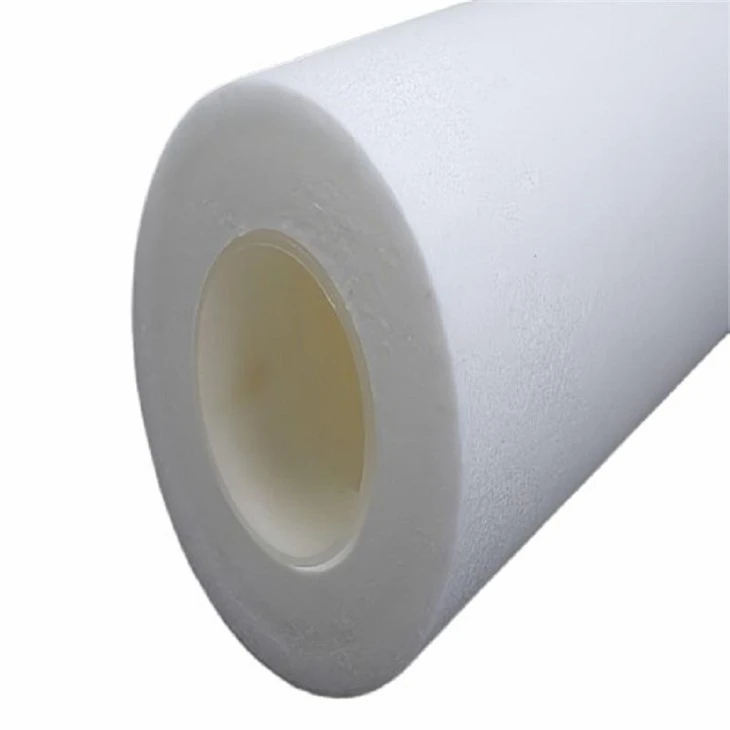
PP filters are well - known for their filtration capabilities. They are typically made from Polypropylene Spun, a material chosen for its durability, chemical resistance, and ability to trap particles of various sizes. There are different types of PP filters, such as the PP Spun Filter, which is designed to remove sediment, dirt, and rust from water. The pp water filter cartridge is another variant, often available in different micron ratings to target specific particle sizes.
PP filters work by a process of mechanical filtration. As water passes through the porous structure of the polypropylene material, particles larger than the pore size are physically trapped. For instance, a 1 - micron pp water filter cartridge can effectively remove particles that are 1 micron or larger in diameter. This characteristic makes PP filters suitable for pre - treatment in many water purification systems.
The Function of a Water Softening System
A standard water softening system is designed to exchange the calcium and magnesium ions in hard water with sodium or potassium ions. This is usually achieved using ion - exchange resins, which are small beads that attract and hold the hardness - causing ions while releasing sodium or potassium ions into the water. The process helps to prevent scale formation in pipes, water heaters, and other appliances, and also enhances the performance and longevity of these devices.
The Role of a PP Filter in a Water Softening System
Pre - Treatment
One of the main ways a PP filter can be used in a water softening system is as a pre - treatment step. Raw water may contain large amounts of sediment, dirt, and rust particles. These particles can clog the ion - exchange resin beads in the water softener, reducing their effectiveness and lifespan. A PP filter placed before the water softener can remove these larger particles, ensuring that the ion - exchange process can occur smoothly.
For example, in areas where the water source is from a well or a surface water supply, there is a higher likelihood of sediment and dirt in the water. By installing a PP spun filter at the inlet of the water softening system, the sediment is removed before it reaches the sensitive ion - exchange resin. This not only protects the resin but also helps to maintain the overall efficiency of the water softening system.

Protecting Downstream Components
In addition to protecting the ion - exchange resin, a PP filter also safeguards other downstream components in the water softening system. Valves, pumps, and meters can be damaged by the abrasive action of sediment particles. By removing these particles, the PP filter extends the lifespan of these components and reduces the frequency of maintenance and replacement.
Advantages of Using a PP Filter in a Water Softening System
Cost - Effectiveness
PP filters are relatively inexpensive compared to other types of filters and components in a water treatment system. They are readily available in different sizes and configurations to fit various water softening systems. This cost - effectiveness makes them an attractive option for both residential and commercial applications.
Ease of Installation and Replacement
PP filters are easy to install and replace. Most come in a cartridge form that can be simply inserted into a filter housing. This means that homeowners or maintenance personnel can quickly replace the filter when it becomes clogged, without the need for specialized tools or extensive training.
Chemical Resistance
Polypropylene is highly resistant to chemicals, which is an important property in a water treatment environment. The filter will not degrade when exposed to the various chemicals used in the water softening process, such as brine solutions (used to regenerate the ion - exchange resin). This chemical resistance ensures the long - term performance of the filter.
Limitations of Using a PP Filter in a Water Softening System
Limited to Particle Filtration
It's important to note that a PP filter can only remove physical particles from the water. It does not have the ability to remove the calcium and magnesium ions responsible for water hardness. Therefore, while a PP filter can enhance the performance of a water softening system by pre - treating the water, it cannot replace the ion - exchange process.
Need for Regular Replacement
PP filters need to be replaced regularly to maintain their effectiveness. As particles accumulate on the filter, the flow rate of water through the filter decreases, and the filtration efficiency may also decline. This means that users need to monitor the condition of the filter and replace it as needed, which adds to the overall maintenance cost of the water softening system.
Conclusion
In conclusion, a PP filter can be effectively used in a water softening system, especially as a pre - treatment step. It helps to protect the ion - exchange resin and other downstream components from sediment and dirt, improving the overall efficiency and lifespan of the system. The cost - effectiveness, ease of installation, and chemical resistance of PP filters make them a suitable choice for many water softening applications.
However, it's important to understand the limitations of PP filters. They cannot soften the water on their own but can only enhance the performance of the softening process. Therefore, a proper water softening system still requires the use of ion - exchange resins or other softening technologies.
If you are considering integrating a PP filter into your water softening system or are looking for high - quality PP filters for other water treatment needs, I invite you to reach out. Our company offers a wide range of PP filters, including PP Spun Filter and pp water filter cartridge, tailored to meet different requirements. Contact us to discuss your specific needs and explore how our products can optimize your water treatment system.
References
- AWWA (American Water Works Association). Water Quality and Treatment: A Handbook of Community Water Supplies. McGraw - Hill.
- Crittenden, John C., et al. Water Treatment: Principles and Design. John Wiley & Sons.